
Last updated October 16, 2026
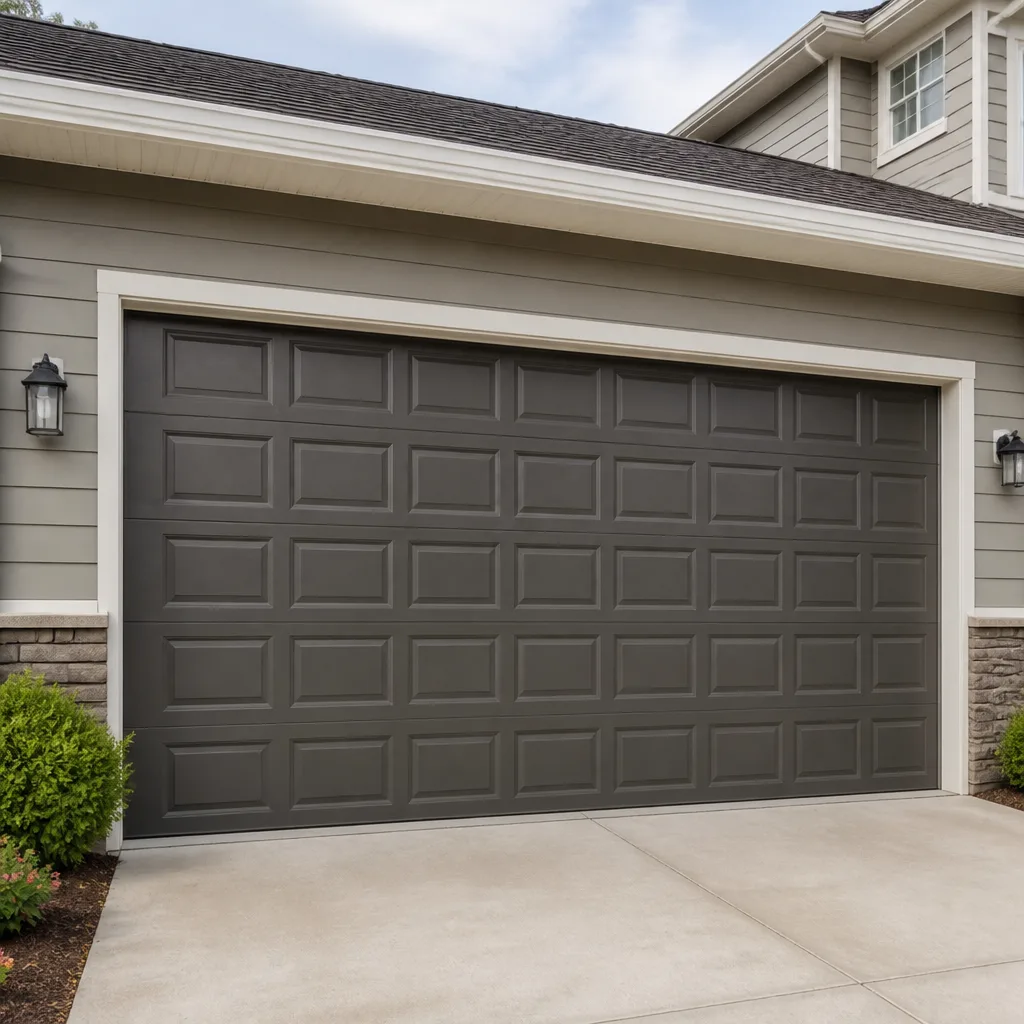 Raised-panel steel
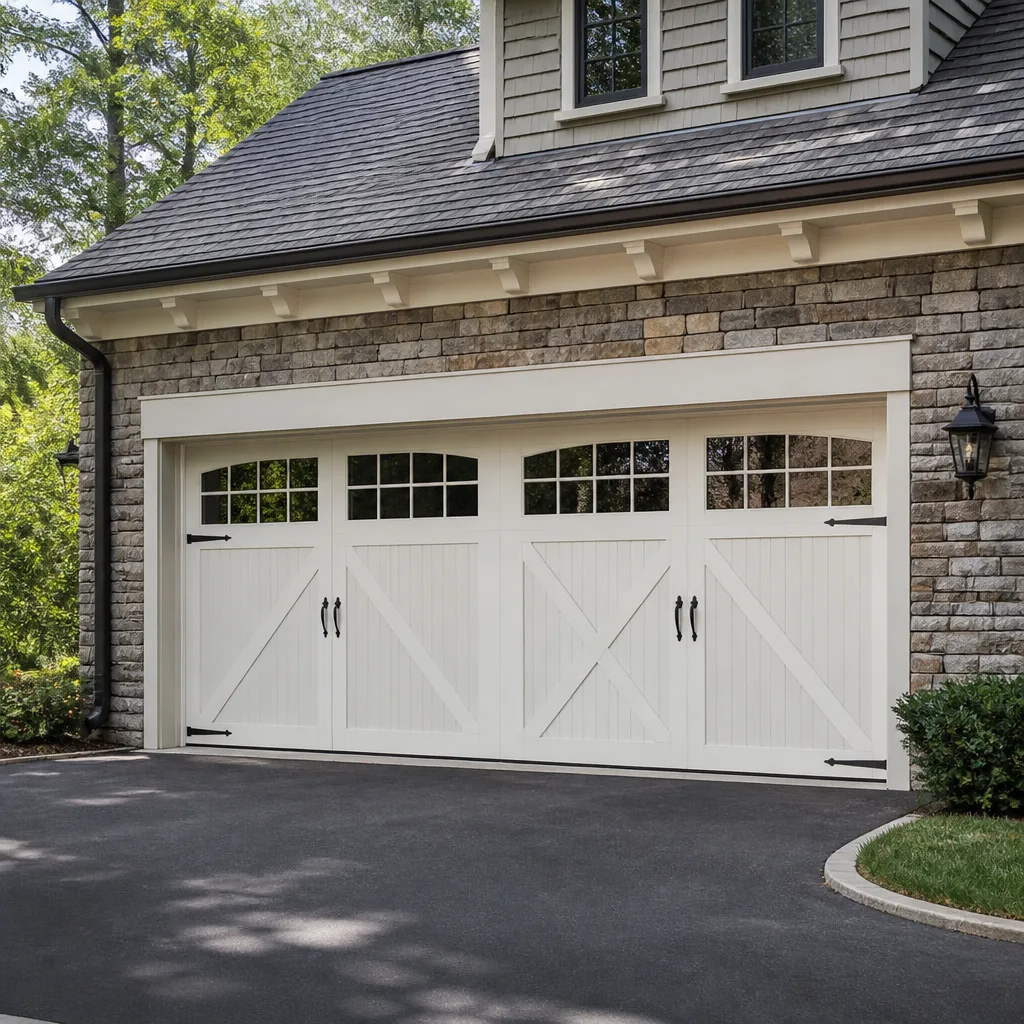 Carriage house
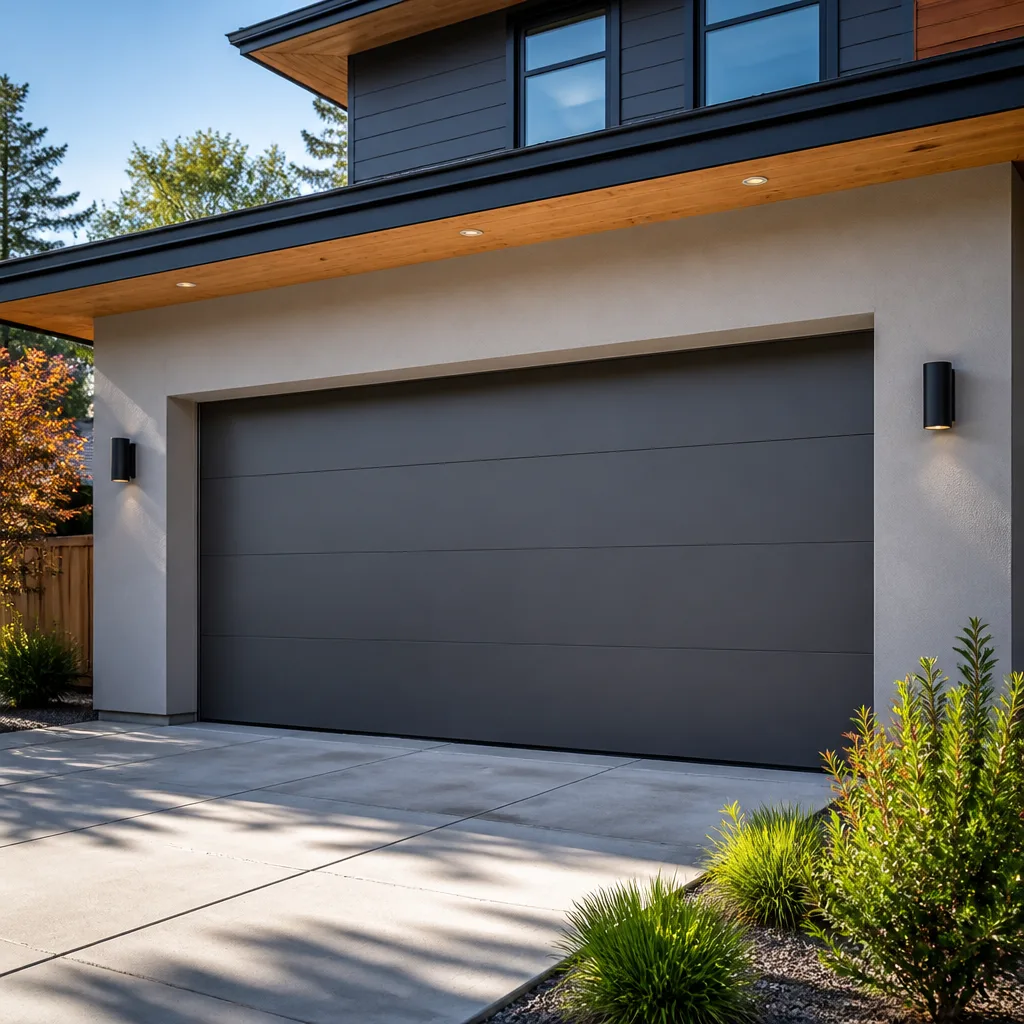 Modern flush
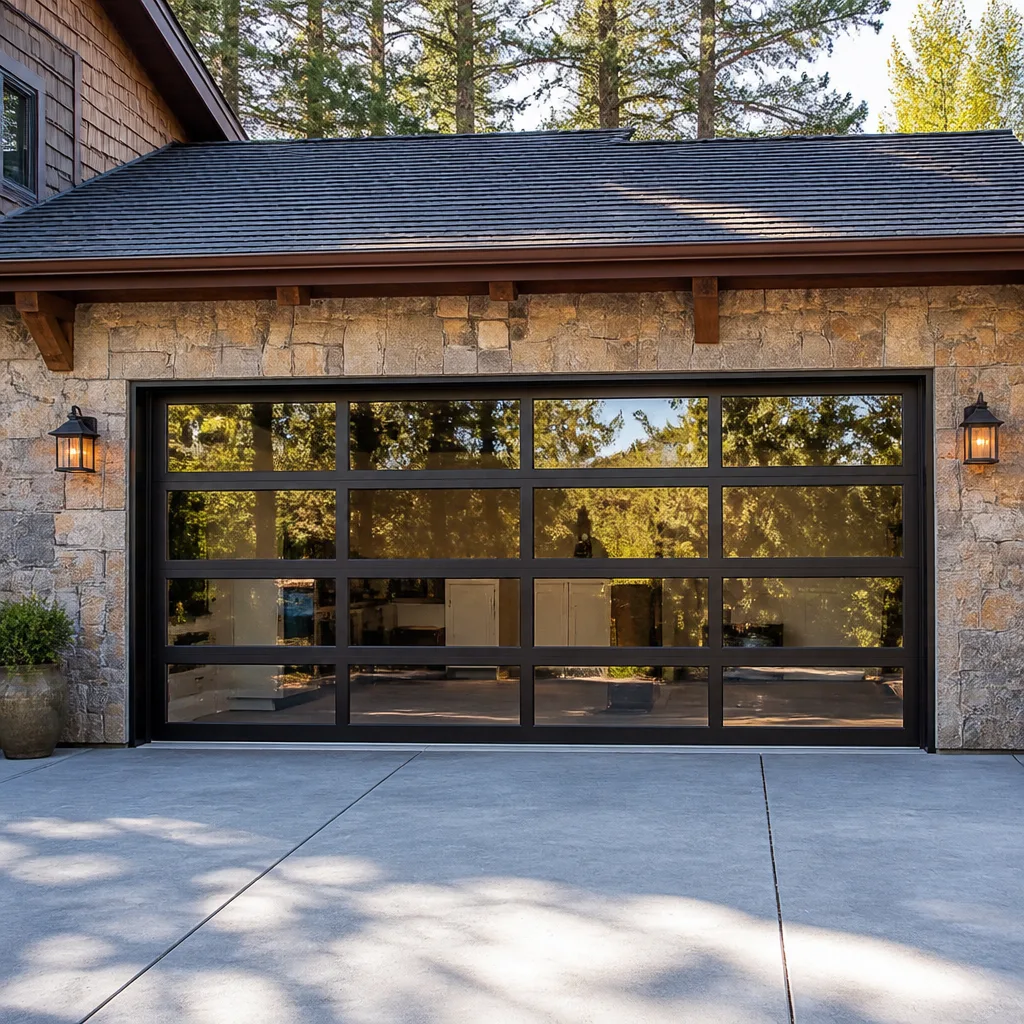 Full-view glass
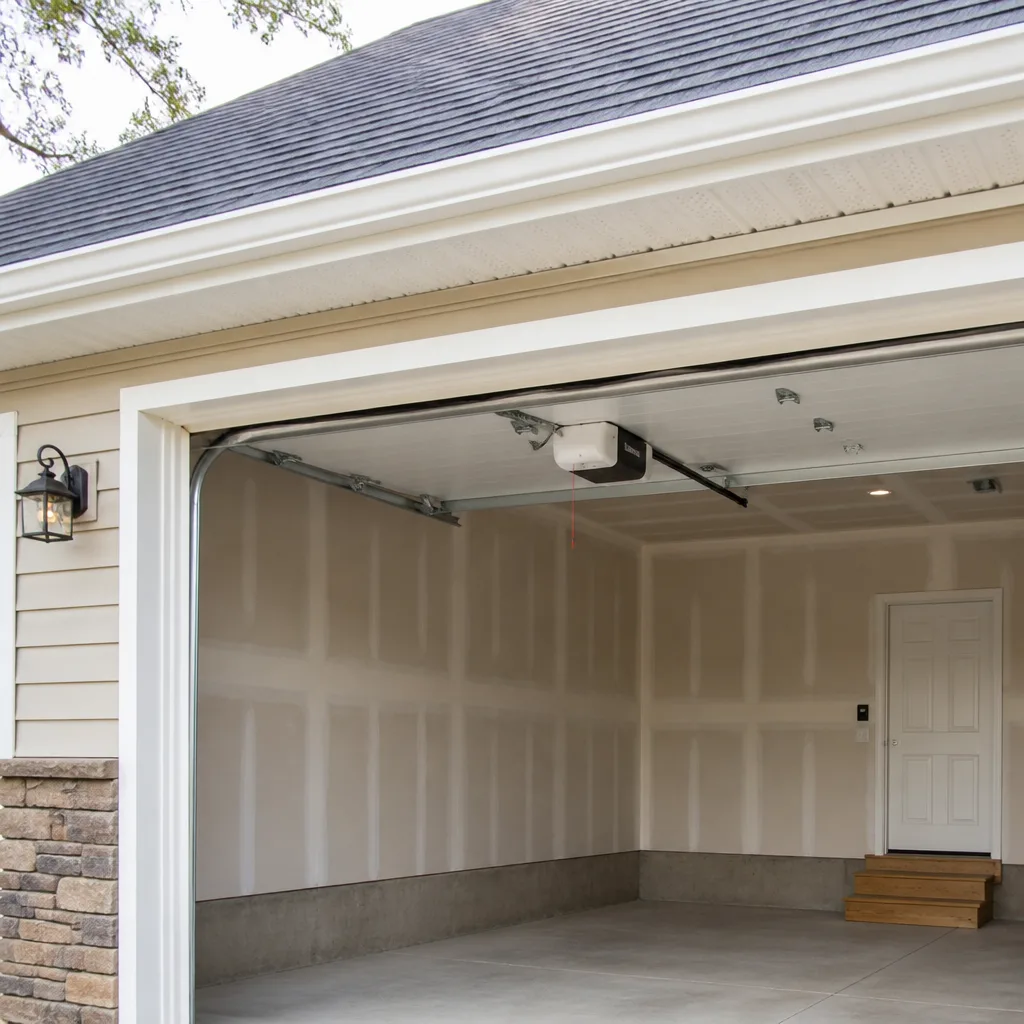 LiftMaster openers
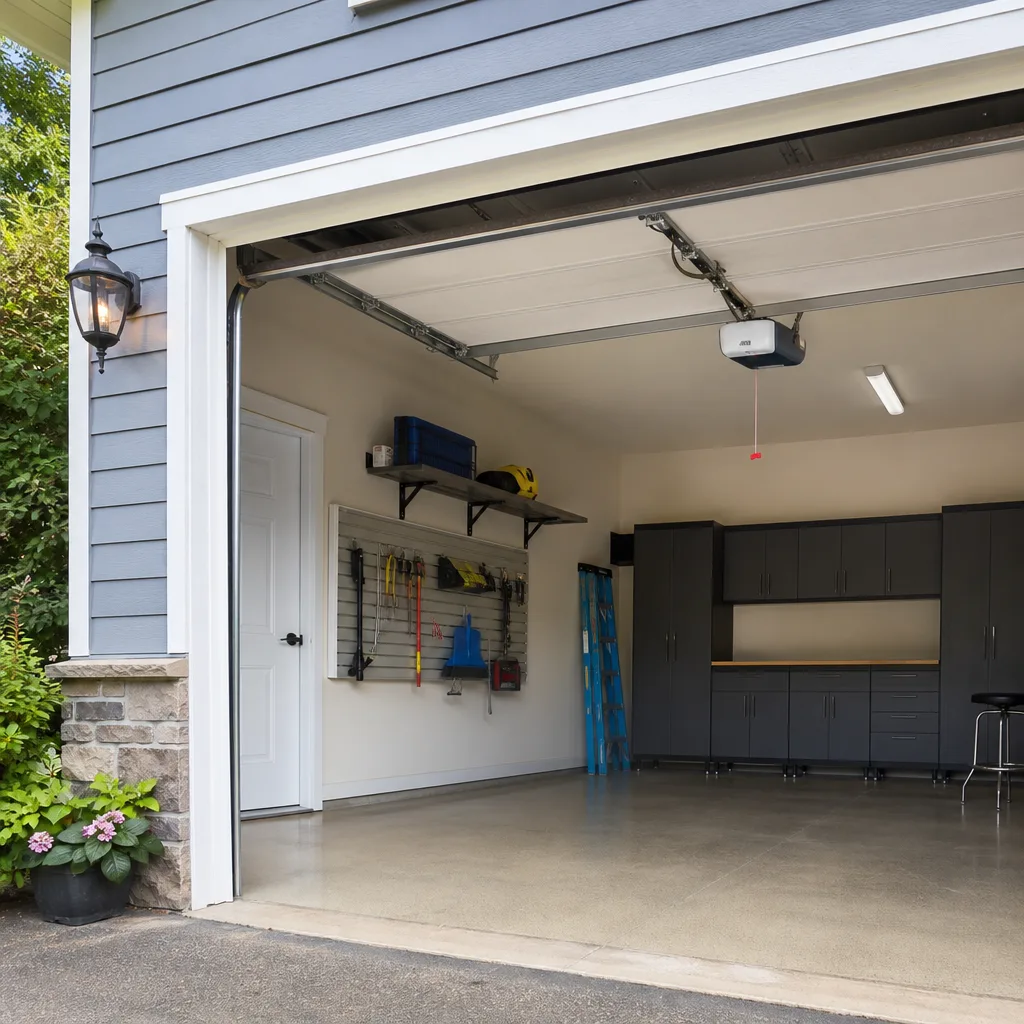 Chamberlain openers
Full 25-point door and opener safety check with every visit - springs, cables, rollers, tracks, and your LiftMaster or Chamberlain opener included
You get a price before we start. It does not change when the truck arrives.
Get your free estimateThe Complete Guide to Garage Door in Marietta
Most homeowners can name their HVAC brand and their roof material, but fewer than one in ten can identify the difference between a torsion spring and an extension spring, even though that distinction determines whether a failure is a $150 fix or a $600 emergency. A garage door is the largest moving object in your home, a 400-pound machine that cycles open and closed roughly 1,500 times a year in Marietta’s heat, humidity, and red-clay dust. This guide names every part, explains what it does, and tells you exactly when a Marietta homeowner should act versus wait.
Quick Answer
A garage door is not one mechanism but seven interconnected systems: springs, cables, tracks, rollers, trolley carriage, limit switches, and weather seal. In Marietta, where summer humidity hovers above 80% and clay dust coats every surface, each system wears at a different rate. Understanding what each part does, what it costs to replace, and the warning signs of failure is the difference between a planned $150 repair and an emergency replacement that runs $800 or more.
Styles & brands we work with
Table of Contents
- The Seven Systems of a Garage Door, Named and Explained
- How Marietta’s Climate Attacks Your Door: Humidity, Clay Dust, and the 95°F Problem
- Torsion vs. Extension Springs: The Distinction That Determines Your Invoice
- Repair or Replace: A Decision Matrix for Marietta Homeowners
- Why ‘Who’s Coming to Your Door’ Is a Safety Feature
- Cobb County Code, HOA Rules, and What Marietta Allows
- The 20-Minute Seasonal Maintenance Routine That Prevents Most Failures
- Warning Signs You Should Never Ignore in Marietta
The Seven Systems of a Garage Door, Named and Explained
Every garage door, whether it’s a $900 builder-grade steel model in East Cobb or a custom wood carriage door off Whitlock Avenue, runs on the same seven subsystems. Here’s what each one does, in trade language first, then plain English.
1. Springs (Torsion and Extension)
The springs counterbalance the door’s weight. Without them, your opener motor would have to lift 200 to 400 pounds dead, and it would burn out in a month. Torsion springs are the large coils mounted horizontally above the closed door, wound tight with torque. Extension springs are long, skinny coils mounted on both sides of the track, stretching when the door closes. Most modern Marietta homes built after roughly 2000 have torsion springs, but the area’s older ranch homes and bungalows often still run extension springs. When a spring breaks, it sounds like a gunshot in the garage, and the door refuses to move or moves only a few inches with the opener straining.
2. Cables
The cables are the braided steel wires that connect the bottom of the door to the spring system. They transfer the spring’s lifting force to the door itself. On torsion systems, the cables wind around drums mounted on a rod above the door. On extension systems, the cables run through pulleys. A frayed cable is a four-inch warning that precedes a snapped cable, and a snapped cable under load can whip across the garage with enough force to cause serious injury. If you see broken strands poking out of a cable, stop using the door.
3. Tracks
The tracks are the steel channels on both sides of the door and across the ceiling that guide the rollers. In Marietta, track issues commonly follow impact damage from cars or lawn equipment, or corrosion accelerated by humidity in non-insulated garages. A bent track section can often be straightened or replaced individually, but a track pulled away from the wall indicates a structural mount problem that needs professional attention.
4. Rollers
Rollers are the small wheels attached to the door’s hinges that ride inside the tracks. Steel rollers with ball bearings last eight to twelve years. Nylon rollers with sealed bearings run quieter and last twelve to fifteen. Plastic rollers without bearings, common on budget builder doors, grind away within three to five years. When a roller seizes, it skids along the track instead of rolling, which drags the door out of alignment and stresses every other component.
5. Trolley Carriage
The trolley carriage is the sliding shuttle attached to the opener’s rail that moves the door open and closed. It connects to the door with a curved arm. On chain-drive and belt-drive openers, the trolley moves along a rail as the motor turns a gear or pulley. When the carriage’s internal gear teeth strip, you hear the opener motor running but the door doesn’t move. This is one of the most common opener failures we see in Marietta, particularly on openers older than ten years.
6. Limit Switches
Limit switches are small adjusters inside the opener that tell the motor where the door should stop when fully open and fully closed. They’re set with screws or dials on the opener unit. When limit switches drift out of adjustment, the door slams into the ground and reverses, or stops two inches shy of closing. These are a frequent culprit in electronic malfunctions and are adjustable in minutes if you know where to look. On newer models, limit settings are programmed through the opener’s keypad.
7. Weather Seal
The weather seal, also called a bottom astragal, is the rubber gasket attached to the bottom edge of the door. It compresses against the floor when the door closes. In Marietta, this part faces the most aggressive abuse from rain, clay dust, and the hundred-degree heat radiating off asphalt driveways. A cracked or flattened seal lets water, red dust, leaves, and insects into the garage. Replacement costs roughly $10 to $25 for the part and takes about an hour for someone who knows the process. Left untended, the resulting moisture accelerates rust on tracks and rollers.
Garage door repair in Marietta most often involves one or two of these systems, not all seven. Knowing which one failed before you call saves you from paying for unnecessary work and helps you describe the problem accurately over the phone.
How Marietta’s Climate Attacks Your Door: Humidity, Clay Dust, and the 95°F Problem
Marietta sits at roughly 1,100 feet of altitude in the Georgia Piedmont, which means we get the full force of Southern humidity without the moderating sea breeze that coastal towns enjoy. Summer highs routinely cross 95°F, afternoon thunderstorms dump rain in sudden bursts, and the famous Georgia red clay works its way into every gap and joint. Each of these forces attacks specific components.
Humidity and the rust problem. Marietta’s average summer humidity climbs above 80% in July and August, and it stays elevated from May through September. Non-galvanized steel rollers, hinge pins, and cable strands absorb surface moisture and oxidize. We regularly replace rollers in Marietta garages at eight years that would have lasted twelve in Phoenix or Denver. Insulated doors fare better because the interior surface stays warmer and condensation forms less readily, but the humidity still reaches exposed hardware.
Red-clay dust and the friction problem. Georgia’s iron-rich clay makes fine, gritty dust that finds its way into roller bearings and track channels. This dust acts as an abrasive, grinding down moving parts and clogging the grease that protects roller housings. We see elevated roller failure rates in Marietta homes with unpaved driveways, gravel lots, or active construction within a few blocks. A quick wipe-down of the tracks and rollers every season removes this abrasive and extends roller life materially.
Heat and the spring problem. Torsion springs are rated for a specific number of cycles, typically 10,000 cycles for standard springs and 20,000 to 30,000 for high-cycle models. Heat doesn’t directly reduce the spring’s cycle rating, but it accelerates the molecular fatigue cycle. Metals expand and contract with temperature changes, and Marietta’s swing from 35°F winter nights to 95°F summer afternoons creates constant micro-flexing. A spring installed in a Marietta garage will typically fail in seven to nine years, whereas the same spring might last ten to twelve years in a temperate coastal climate with a smaller temperature range.
Freeze-thaw and the seal problem. Marietta usually sees a handful of nights below freezing each winter, often followed by a 60°F thaw within days. This cycle cracks vinyl weather seals that have already been stiffened by summer heat. We replace more bottom seals in February and March than any other time of year, because January’s brief cold snaps harden the rubber and then spring’s warmth exposes the cracks.
Torsion vs. Extension Springs: The Distinction That Determines Your Invoice
This section matters more than any other in this guide because it determines whether your repair is a routine service call or a major expense. For a deeper look at how these costs add up, see our Garage Door Cost Breakdown: The Marietta Homeowner’s Reference for 2026. Here’s the difference in plain terms.
A torsion spring is the large coil mounted horizontally on a metal rod directly above your garage door opening, centered on the wall. When the door closes, the spring winds tighter; when it opens, the spring unwinds and does the heavy lifting. One or two torsion springs handle the entire door’s weight. If a single torsion spring fails, the repair in Marietta typically runs $180 to $340 including the part and labor for a standard single-car door, and $250 to $450 for a double-car door. Most jobs are completed same-day because the parts are standard sizes stocked on the truck.
An extension spring is a long, narrow coil mounted alongside the horizontal track, one on each side of the door, stretching when the door closes and contracting when it opens. These systems are older and less safe because they lack the containment cable that modern torsion springs have. If an extension spring fails, the springs on both sides should be replaced together since they wear at the same rate. Extension spring replacement runs $150 to $250 in Marietta for a matched pair.
The practical difference: torsion springs last longer, fail more predictably, and cost slightly more per repair. Extension springs are cheaper per pair but your door is less safe and repairs become more frequent as the door ages. Most new doors installed in Marietta use torsion springs. Most pre-1995 homes still have extension springs unless a prior homeowner upgraded.
Warning: torsion springs are under extreme tension, enough to cause serious injury or death if mishandled. Never attempt to remove, adjust, or replace a torsion spring yourself. This is the one component on your garage door where calling a professional is not optional. At Doyle Garage Doors Marietta home, every technician who touches torsion springs is factory-trained and replaces the pair, not just the broken one, because the unworn spring is nearly as tired as the failed one.
Repair or Replace: A Decision Matrix for Marietta Homeowners
At some point, the math flips from repair to replacement. Here’s how to know where your door stands.
Repair makes sense when:
- The door is under 15 years old, and the panels, frame, and tracks are in good structural condition.
- The failure is isolated to one system: one broken spring, one snapped cable, one bad roller, one misadjusted limit switch.
- The total repair cost is under 40% of what a replacement door would cost.
- The door operates smoothly when the failed part is temporarily excluded from the picture.
- The door is a standard size and standard design that matches common parts carried on service trucks in Marietta.
Replacement makes sense when:
- The door is over 20 years old and has had two or more repairs in the past three years.
- Multiple panels are dented, rusted, or delaminating, and the door is no longer insulating the way it originally did.
- You’re planning to sell the Marietta home within two years and want to avoid a buyer-requested repair credit.
- The door is an odd, discontinued brand or size that requires special-ordered parts with long lead times.
- You want to upgrade to a quieter belt-drive opener system and your existing door’s hinges and rollers are too worn to quiet down effectively.
Here’s the cumulative cost math: if you’ve replaced a spring for $280, a roller set for $180, and a cable for $150 within 24 months, you’ve spent $610 on a door that may fail again in a different system within the year. A new mid-grade steel door with installation in Marietta typically runs $1,400 to $2,400 for a single-car and $2,200 to $3,800 for a double-car. When repairs approach a third of replacement cost, start planning the budget rather than rolling the dice on the next component failure. Garage door installation in Marietta packages include a written price before any work starts, so you can compare replacement against compounding repair costs with real numbers in hand.
Why ‘Who’s Coming to Your Door’ Is a Safety Feature
When you call a garage door company, you’re making a promise: you’ll open your home to a stranger. For a homeowner who is home alone, has small children, or is an older adult, that promise carries real weight. If you’re weighing whether to fix it yourself or call a pro, our DIY vs Professional Garage Door: The Marietta Homeowner’s Decision Guide covers that choice in detail. Most garage door companies treat the service call as anonymous. You get a truck, a uniform, and a handshake, and you’re expected to trust all of it.
The Threshold Verified standard works differently. Every technician at Doyle Garage Doors Marietta is background-checked and identity-verified under the Threshold Standard, which was built for this exact concern. Before the visit, you receive the technician’s name and photo. When they arrive, they wear a clean marked uniform and present a photo ID badge at the door. You know exactly who is coming, and you can verify it before you unlock the door.
This matters in Marietta because our service area covers everything from quiet cul-de-sacs in West Cobb to townhome communities near the Square. A homeowner in a townhome shared-wall situation cannot afford to let an unverified person into a space that connects to their living area. A parent home alone with a toddler doesn’t want to wonder whether the person knocking is the technician they called. This process removes that uncertainty entirely.
In our experience, the customers who value this feature most are precisely the ones the rest of the industry overlooks: people who actually read the fine print, people who research reviews, and people who would rather know too much than risk knowing too little about the person walking through their garage door.
Cobb County Code, HOA Rules, and What Marietta Allows
Garage door replacement in Marietta is governed by Cobb County building codes, which incorporate the International Residential Code with local amendments. For full details on permits and inspections, read our guide to Garage Door Permits, Codes & Inspections in GA: What You Need to Know. The practical requirements that affect most homeowners are straightforward.
Wind load requirements. Cobb County is in a moderate wind zone, meaning doors must be rated for wind pressure in accordance with the manufacturer’s installation specifications. Most modern steel doors carry the necessary rating out of the box, but a door installed improperly against its wind rating can pull away from its track during one of Marietta’s severe spring thunderstorms. The installer matters as much as the door.
HOA color and style restrictions. Marietta’s HOA landscape is dense. Large subdivisions like Indian Hills, East Cobb’s Walton corridor communities, and newer townhome developments near Barrett Parkway commonly have restrictive covenants that dictate garage door color, window style, and sometimes even the number of panels. Some HOAs require recessed panel doors only; others prohibit certain wood-look finishes. Before selecting a new garage door, request the HOA’s design standards document if your community has one. Doyle Garage Doors Marietta can install doors that meet any HOA spec in Cobb County, including custom colors and panel profiles.
Permit requirements. In unincorporated Cobb County and within Marietta city limits, garage door replacement that does not alter the opening size typically requires no separate building permit for residential properties. If your project involves widening the opening, adding a second door, or structural header work, a permit is generally required. When you get a garage door installation in Marietta quote, the written estimate will clarify whether your specific job needs a permit and who handles the application.
Historical district review. Homes within Marietta’s historic districts, including Church Street and Cherokee Street corridors, may require review by the Historic Preservation Commission before a garage door is replaced. If your home is in a locally designated historic district, budget an extra two to four weeks for approval. This guide cannot replace a check with the City of Marietta planning office, but knowing to ask the question saves you a rejected installation.
The 20-Minute Seasonal Maintenance Routine That Prevents Most Failures
Most garage door failures in Marietta are preventable, and the prevention routine takes about twenty minutes per season. Here’s the four-step process we recommend to every homeowner who asks.
- Lubricate the moving stays (5 minutes). Spray a lithium-based grease onto the torsion spring coil, the roller hinges, and the track curves where the roller bearings turn. Do not lubricate the track channel itself; that collects clay dust and gum up the rollers. Do this every three months in Marietta because the humidity alternates with dry spells and dries out factory grease faster than in drier climates.
- Inspect the cables and springs visually (3 minutes). Stand inside the garage and look at both cables. Count the visible broken strands. If you see any, stop using the door immediately and call for repair, because a snapped cable under tension is dangerous. Look at the torsion spring coils. If you see a visible gap between two coils, the spring has snapped and needs replacement today.
- Test the auto-reverse safety mechanism (4 minutes). With the door closed, place a roll of paper towels on the floor in the door’s path, then close the door using the opener. The door should reverse within two seconds of touching the roll. If it doesn’t reverse, the safety sensor is out of alignment or the opener’s sensitivity setting needs adjustment. This is a safety feature mandated by federal law since 1993, and it saves lives. Test it monthly.
- Clean the bottom seal (3 minutes). Wipe the bottom seal with a damp cloth to remove red clay dust and grit that abrades the rubber. Inspect for cracks and flat spots. A seal that’s cracked in January will let water and debris in during spring storms. Replacement seals are inexpensive and take an hour for a professional to swap.
For a complete operational check, including tension and balance testing, have a professional inspect the door annually. Doyle Garage Doors Marietta includes a written inspection summary with every visit, so you know exactly what was checked and what the technician recommends.
Warning Signs You Should Never Ignore in Marietta
Garage doors almost never fail without warning. The failure announces itself days or weeks ahead. Here are the signs Marietta homeowners should recognize, ranked by urgency.
- Gunshot pop followed by a door that won’t open. That’s a broken torsion spring. Unplug the opener and leave the door alone. Call a professional, because the door is now unbalanced and dangerously heavy on one side.
- Door opens a few inches and stops, with the motor still running. That’s a spring or cable problem, not an opener problem. Continuing to run the opener will strip the trolley carriage gear and turn a $300 spring repair into a $600 opener repair too.
- Grinding or squealing sound while the door moves. That’s a roller failing or a hinge that has seized. The noise will get worse, and eventually the roller will pop off the track and derail the door.
- Door drifts down after being opened, or slams after being closed. That’s spring fatigue. The springs are no longer counterbalancing the door’s weight. If the door is heavy by more than a few pounds when you lift it manually, the spring’s cycle rating is exhausted.
- Visible rust blooming on cables, tracks, or rollers. Rust in Marietta means the zinc coating has been breached and the structural metal is oxidizing. A rusted cable is a snap waiting to happen under load.
- Opener runs but the door doesn’t move, or it moves only with a push. That’s the trolley carriage’s internal gear stripped out. This is common on openers older than ten years and usually means the opener is at end of life. Garage door opener repair in Marietta can sometimes replace just the gear, but most homeowners at this point benefit from a full opener replacement with a new belt-drive unit.
Common Mistakes to Avoid
- Lubricating the track channel. The track is a guide rail, not a bearing surface. Greasing it attracts red clay dust and forms an abrasive paste that destroys rollers. Lubricate the bearings, hinges, and springs only.
- Replacing one spring on a two-spring door. The surviving spring has the same number of accumulated cycles as the failed one. Replacing only the broken spring means you’ll be paying for the second replacement within months. Always replace the pair.
- Continuing to use the opener after a spring breaks. The opener is now trying to lift 400 pounds with no counterbalance. This strips gears and burns out motors, turning a spring repair into a full opener replacement.
- Ignoring HOA design rules before ordering a new door. In Marietta’s HOA-heavy subdivisions, a non-compliant door can trigger a forced replacement at your expense. Check the HOA’s design standards before the door is ordered, not after it’s installed.
- Skipping the monthly auto-reverse test. This safety feature matters most in homes with young children. The test takes two minutes and catches misaligned sensors before they matter.
- Choosing the cheapest quote without checking the guarantee. Every repair at Doyle Garage Doors Marietta comes with a written 365-day guarantee, a promise most Marietta competitors don’t match. Read the guarantee language before you choose, not after the door fails again.
- Treating a noisy door as a personality quirk. Grinding, popping, and squealing are mechanical distress signals. Each one has a specific cause, and ignoring it costs more later.
See the difference
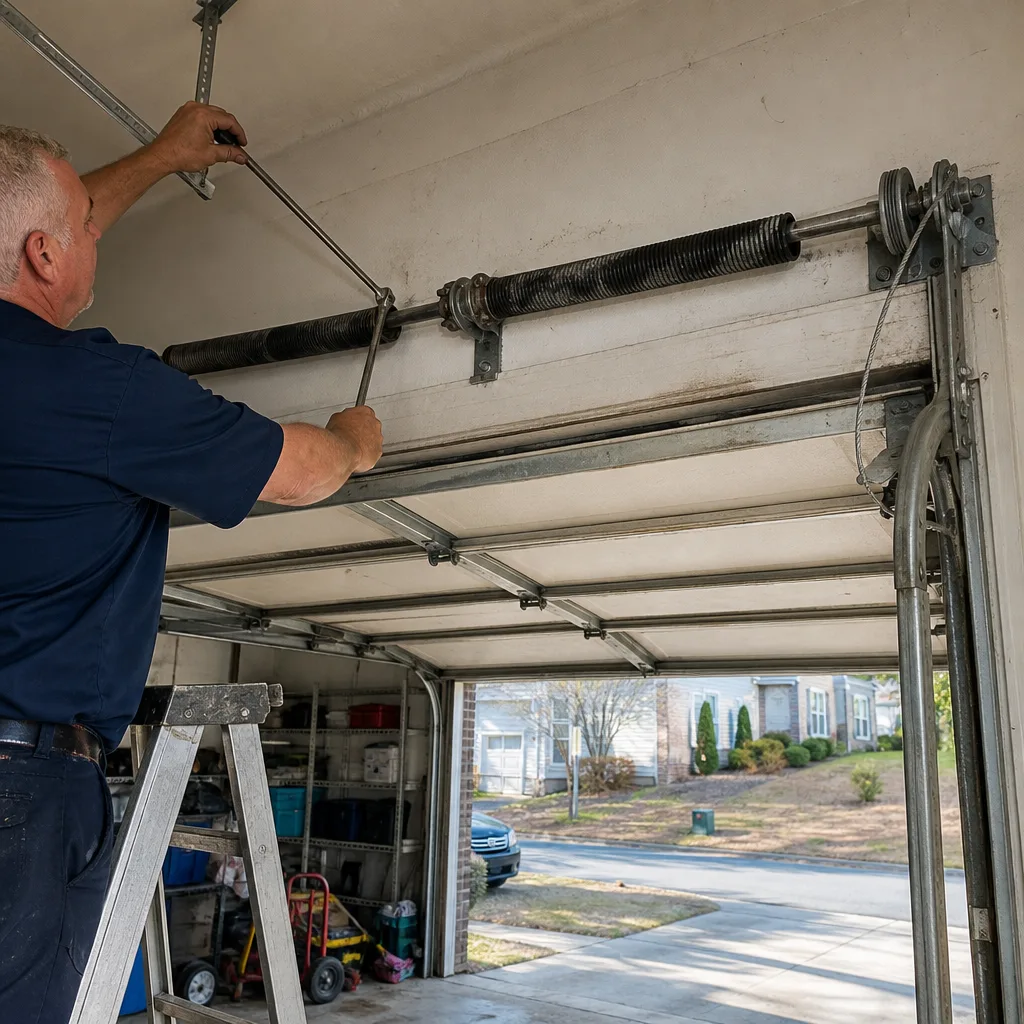 Before
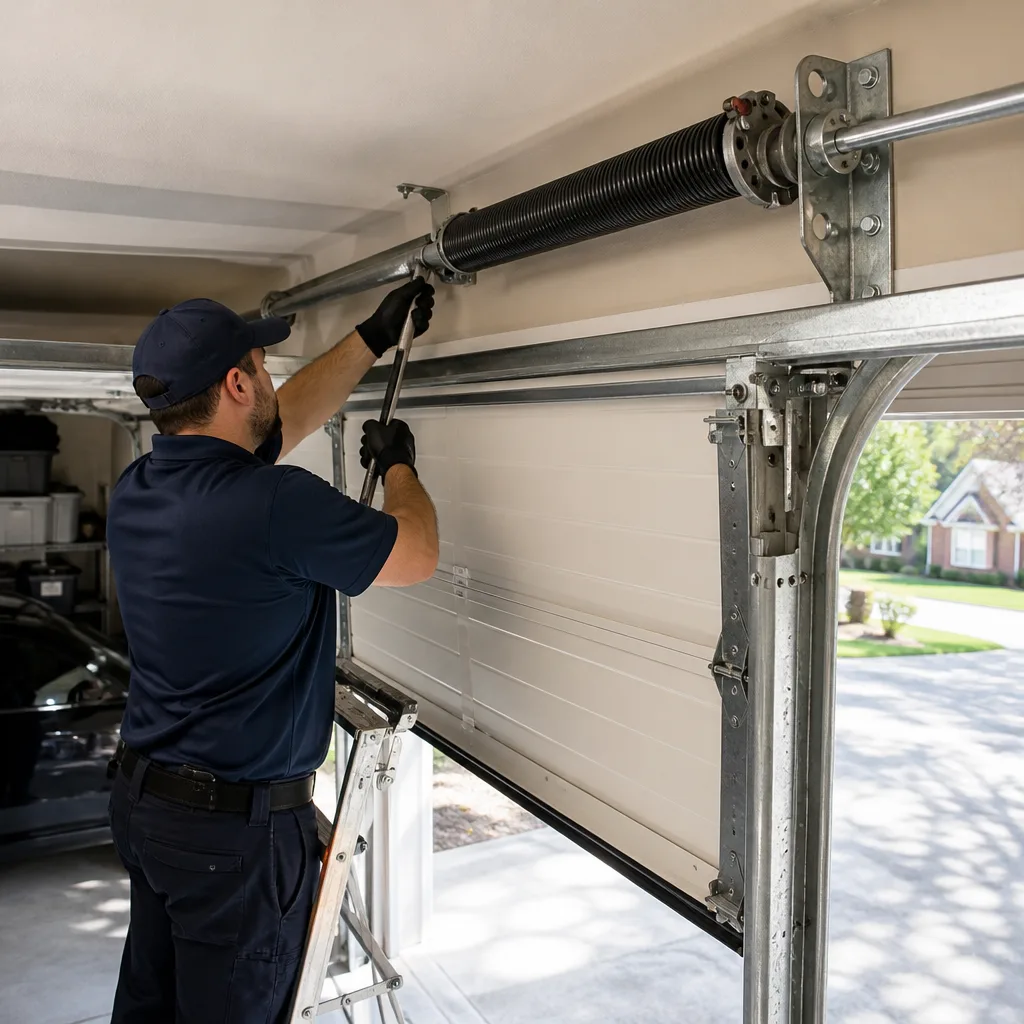 After
After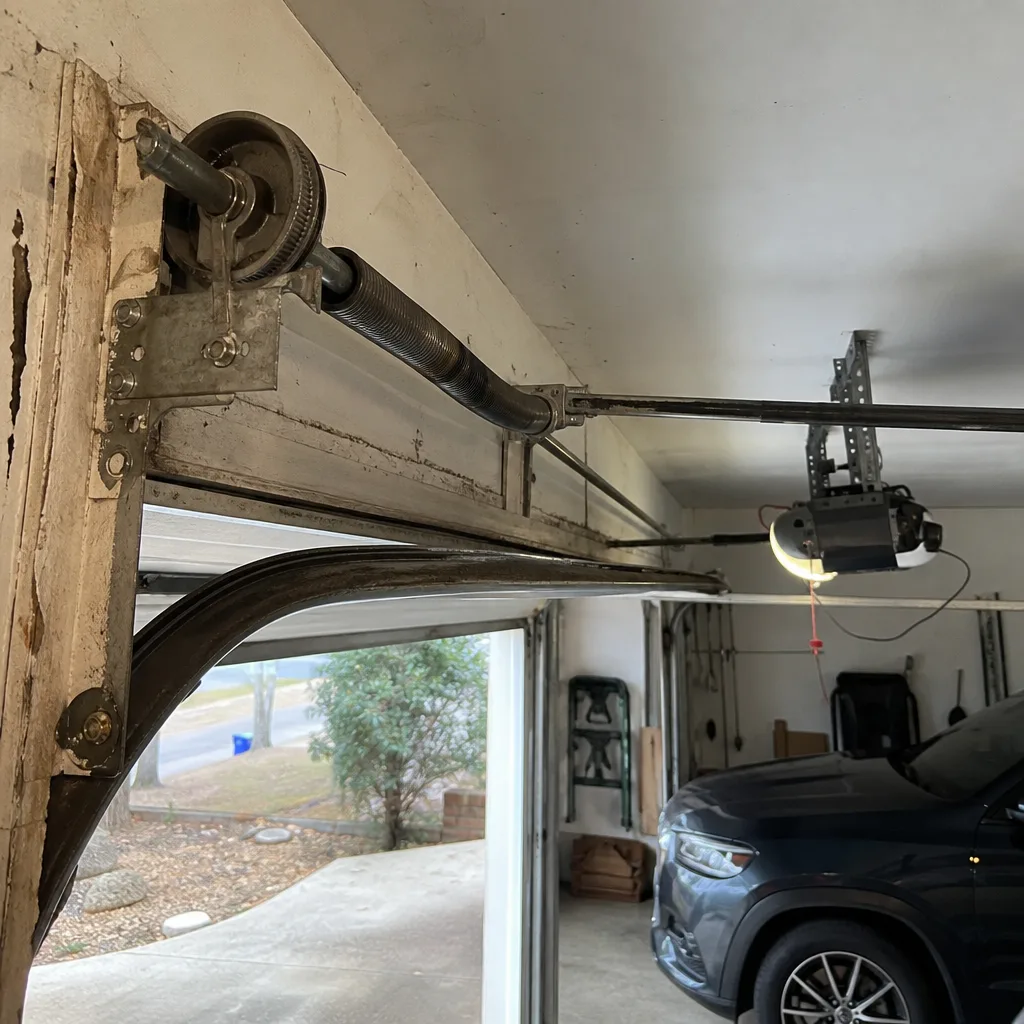 Before
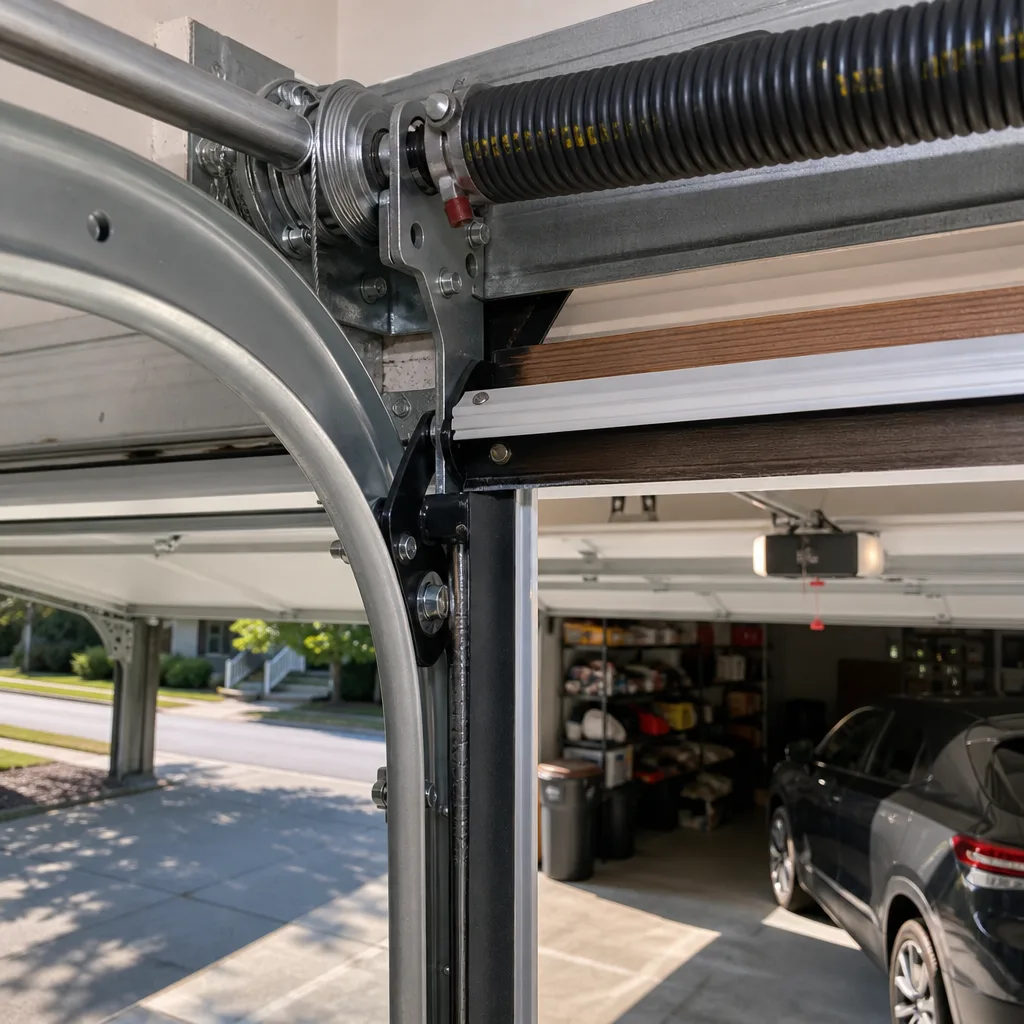 After
After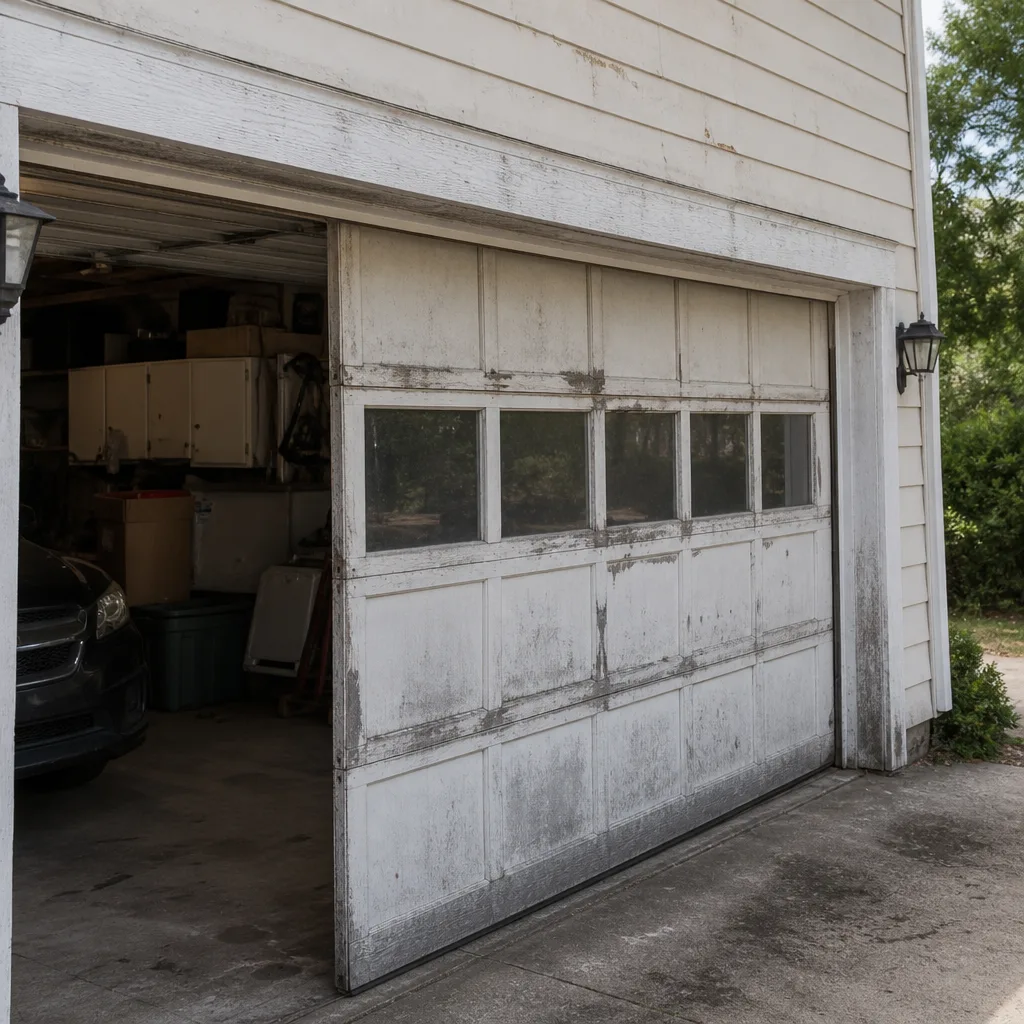 Before
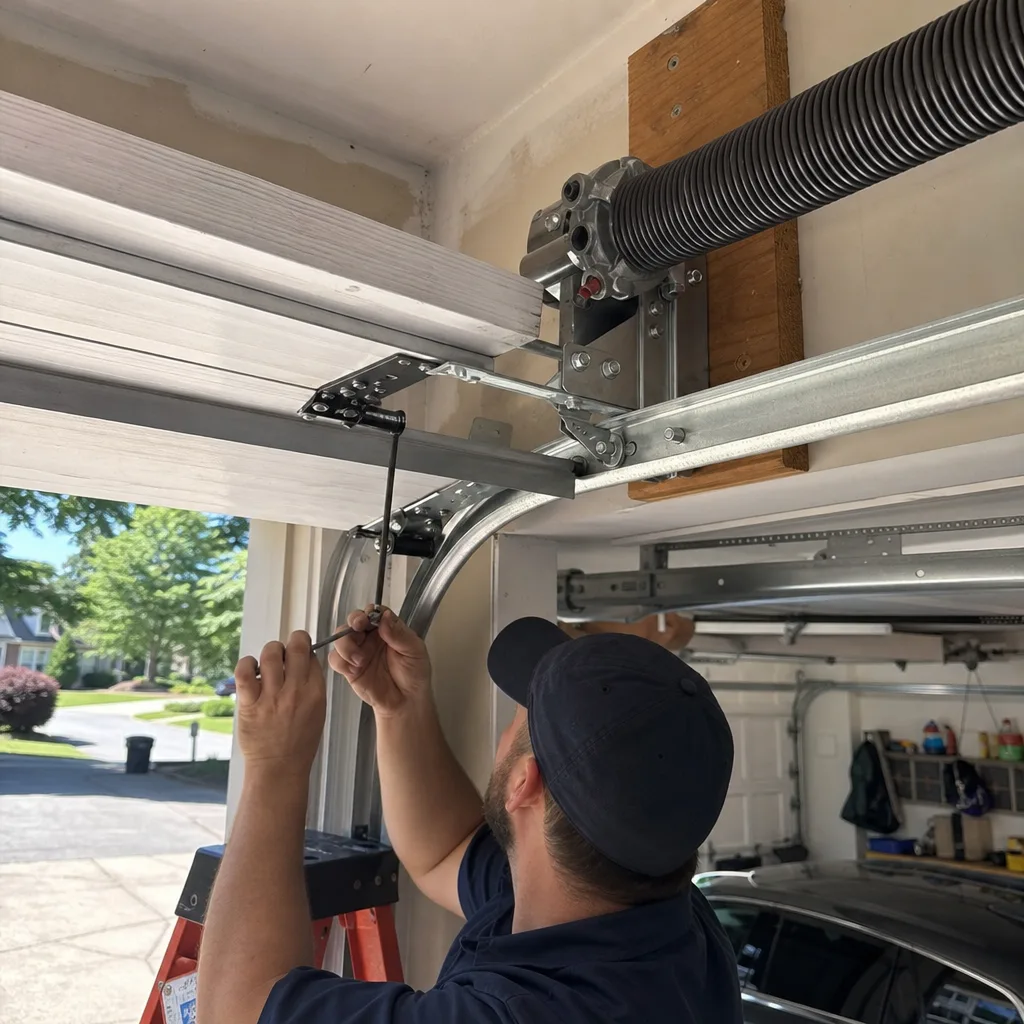 After
AfterWhen to Call a Professional
Some garage door issues are safe to inspect on your own. Others are not. Call a professional for any of these situations in Marietta: broken springs, frayed cables, a door that’s off its track, an opener that runs without moving the door, any issue involving the torsion spring’s tension, or any situation where you’re unsure whether the door is stable. Torsion springs carry enough force to cause serious injury, and cables under load can cut. Doyle Garage Doors Marietta offers free estimates in Marietta, and every job includes a written price before any work starts. Call (762) 209-3693 to schedule a visit, or call the same number at any hour, day or night, to talk to a live person about what your door is doing.
Frequently Asked Questions
In Marietta, replacing a single torsion spring runs $180 to $340, and replacing a pair runs $250 to $450 for standard single and double doors. Extension spring pairs typically run $150 to $250. The price depends on spring size and cycle rating. Doyle Garage Doors Marietta gives every customer a written price before any work starts, covering both the parts and the labor. Call (762) 209-3693 for an exact quote for your door.
Yes, most spring, cable, and roller repairs are completed same-day because parts for standard doors are stocked on our technicians’ trucks throughout Marietta. If your door fails in the morning, a technician can usually reach your home in Marietta that same afternoon. If a specific part must be ordered, we’ll tell you before ordering and give you the expected time frame in writing.
No. The price you’re quoted is the price you pay. Every job includes a written price handed to you before any work starts, and the total does not grow after the fact. If additional repairs are needed beyond the original scope, the technician will show you the new written price and get your approval before doing any extra work.
Yes, for standard-size springs, cables, rollers, hinges, and openers on all major brands including LiftMaster, Chamberlain, and Genie, the parts are on the truck. If you have a non-standard door that requires special parts, we’ll tell you on the phone before the visit and give you the order timeline.
With proper maintenance, a quality steel garage door in Marietta lasts 15 to 20 years. The springs last 7 to 9 years, rollers 8 to 15 years depending on material, and cables 8 to 12 years. Marietta’s humidity and summer heat compress these ranges slightly compared to drier climates, but seasonal lubrication and visual inspections extend every component’s life.
First, identify the noise. A gunshot-like pop is a broken spring; stop using the door immediately. A grinding sound is a failed roller or seized hinge. A squealing sound is dry bearings. A clicking sound can be the opener’s limit switches or trolley gear. If it’s a spring, do not try to open or operate the door manually. Call a technician, and the repair will almost always cost less because you caught the failure before it damaged other systems. Call (762) 209-3693 and describe the sound; a live person answers 24/7, including weekends and holidays.
The Bottom Line
A garage door in Marietta is a 400-pound machine fighting Georgia humidity, red clay dust, and 95°F summer heat every single day. Its seven systems, springs, cables, tracks, rollers, trolley carriage, limit switches, and weather seal, each wear at their own pace, and each gives warning before failing. Learn the warning signs, do the twenty-minute seasonal routine, and know the difference between a torsion and extension spring. For more guides & resources on keeping your door running, visit our blog. When a repair is needed, demand a written price before work starts, a written guarantee on the repair, and verification of who’s standing at your door. All three are standard practice at Doyle Garage Doors Marietta, and none of them cost extra.
Written by Aaron Teague, Owner at Doyle Garage Doors Marietta, serving Marietta since 2001.