
Last updated October 16, 2026
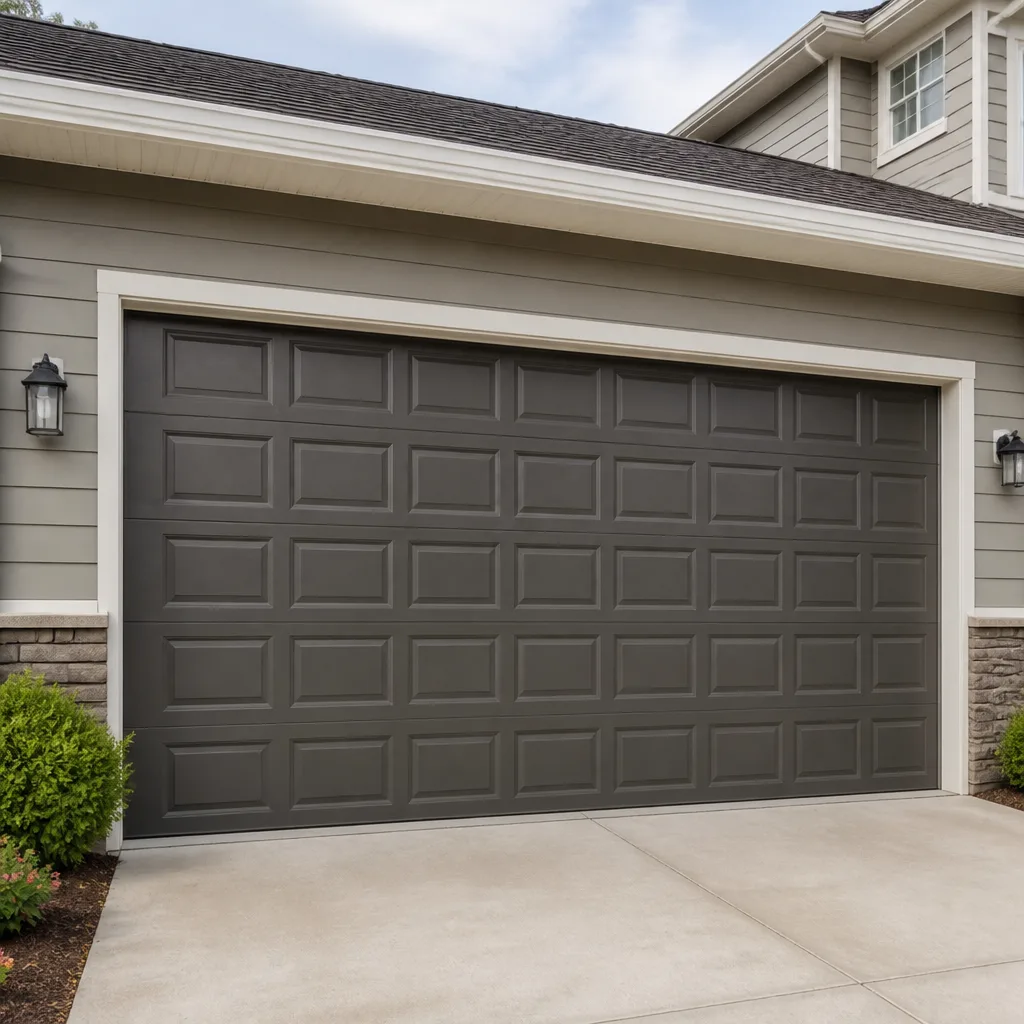 Raised-panel steel
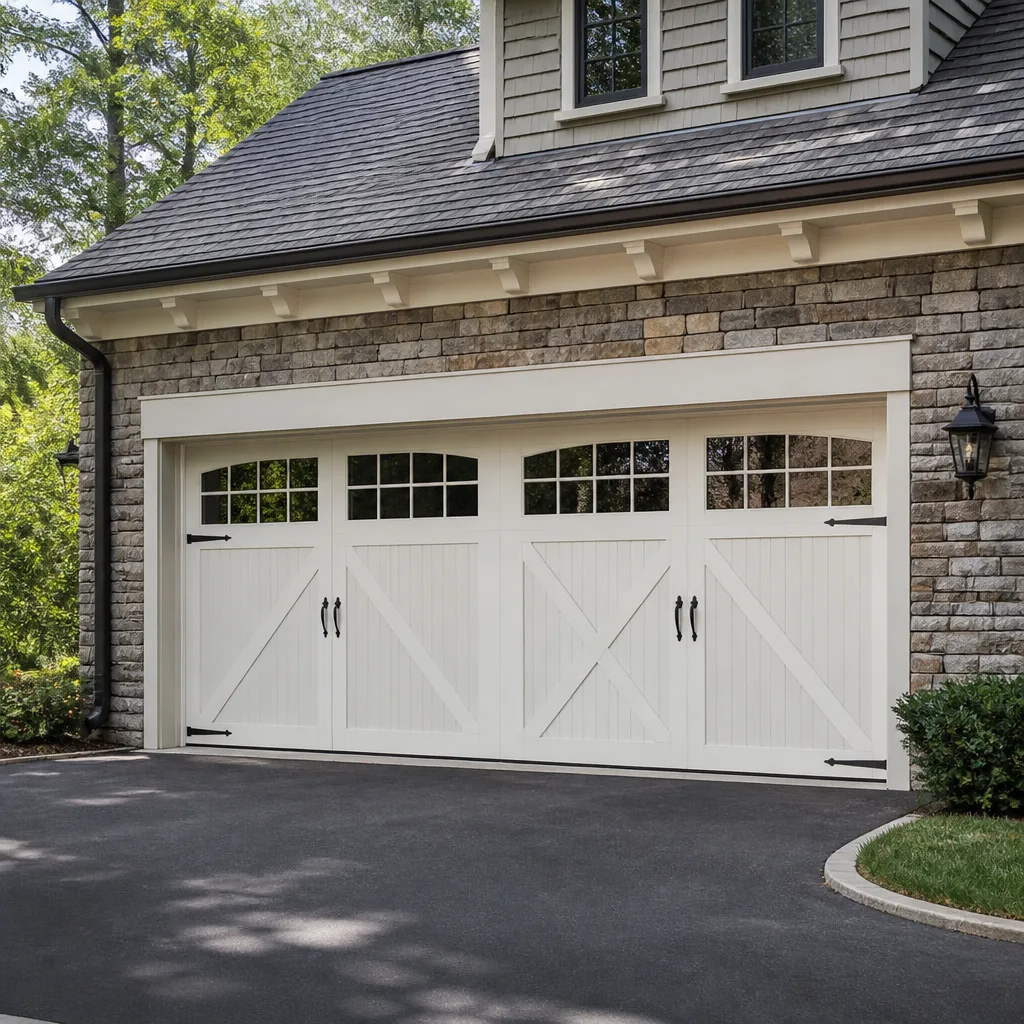 Carriage house
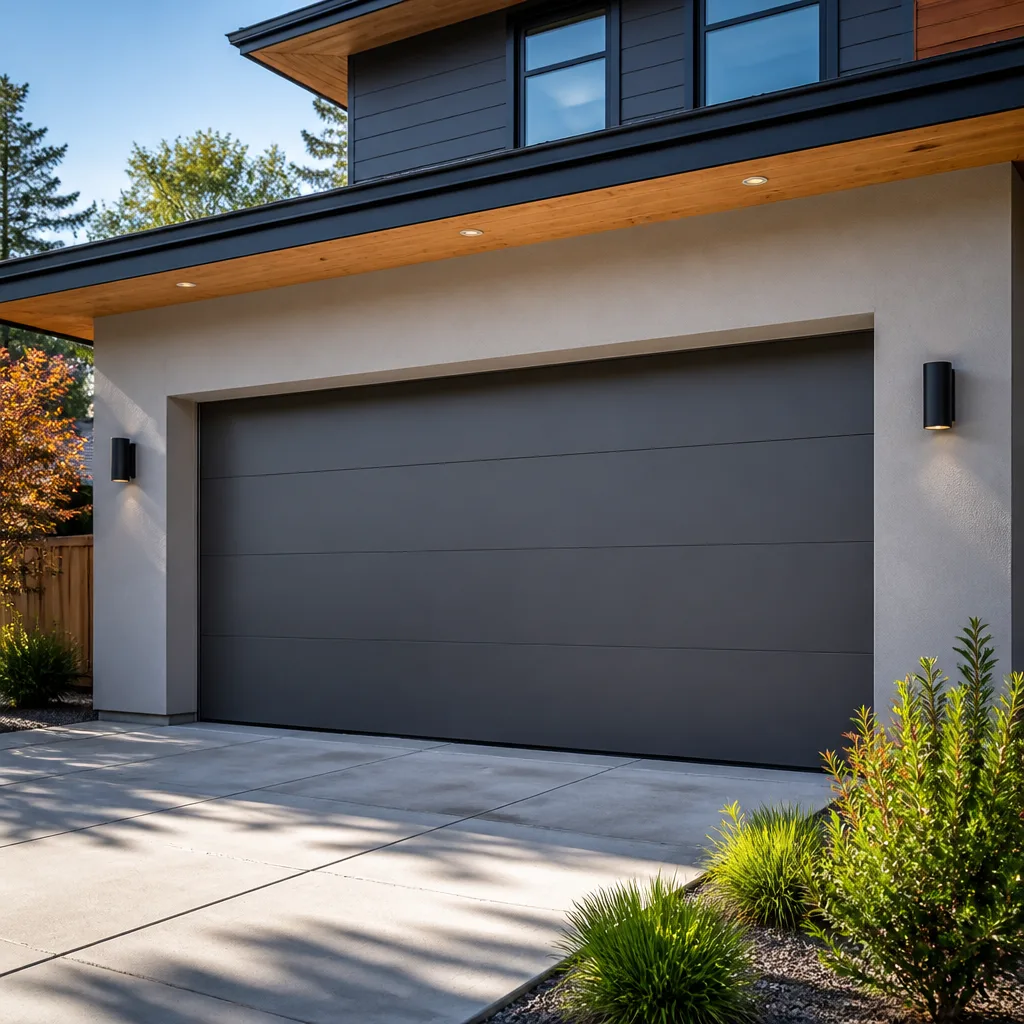 Modern flush
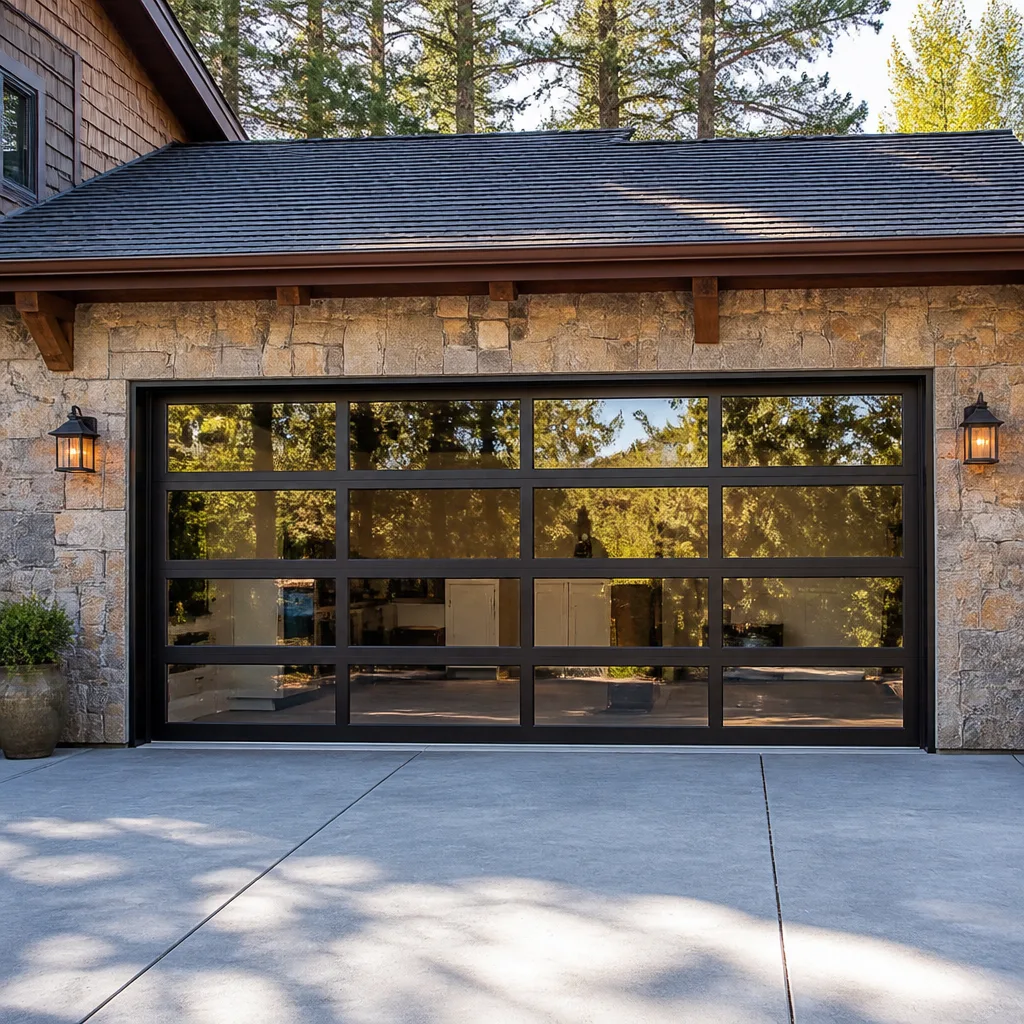 Full-view glass
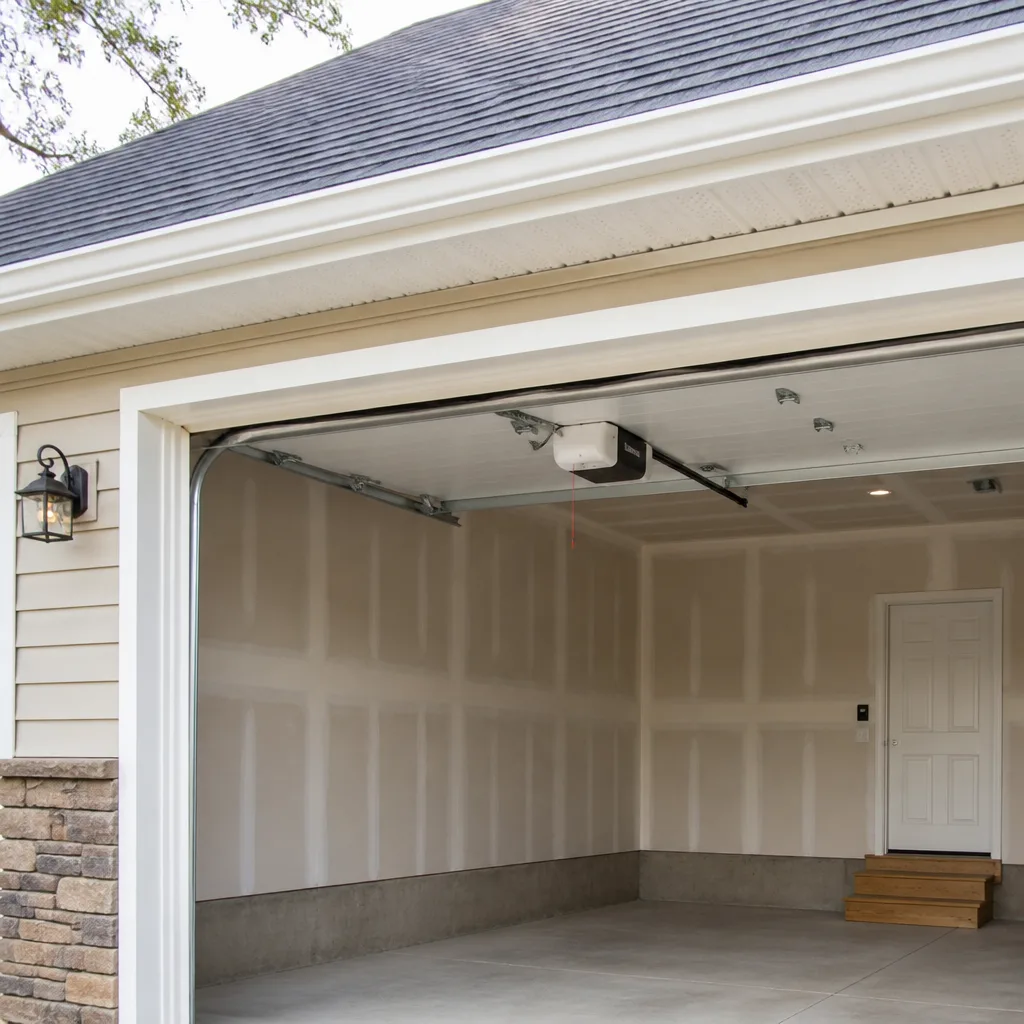 LiftMaster openers
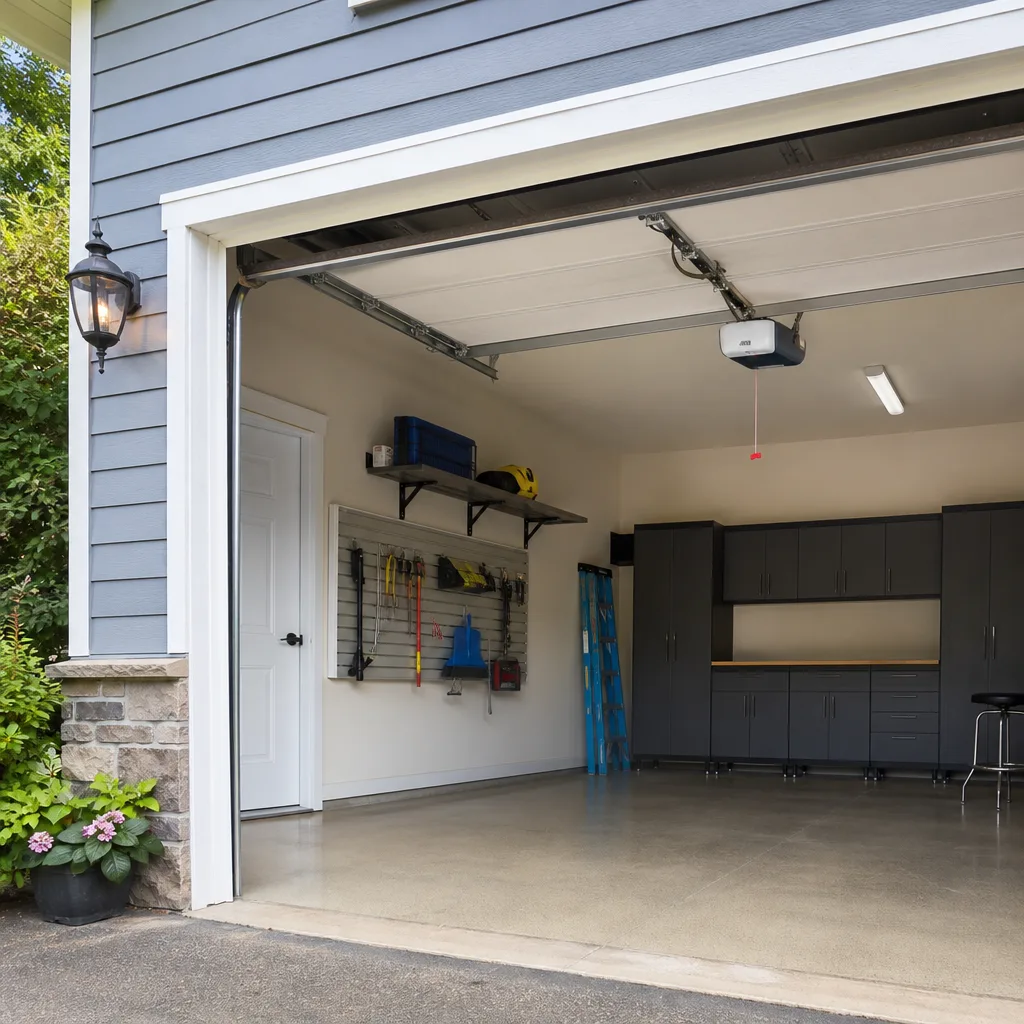 Chamberlain openers
Full 25-point door and opener safety check with every visit - springs, cables, rollers, tracks, and your LiftMaster or Chamberlain opener included
You get a price before we start. It does not change when the truck arrives.
Get your free estimateDIY vs Professional Garage Door: The Marietta Homeowner’s Decision Guide
A torsion spring on a standard two-car garage door stores roughly the same energy as a drawn crossbow, and it doesn’t care how many YouTube videos you watched. The injury statistics from DIY spring failures aren’t about carelessness; they’re about physics that doesn’t forgive margin-of-error. This guide draws a clear line between what’s genuinely safe for a Marietta homeowner to handle and what belongs in the hands of someone who does this every day, and it pairs well with our Garage Door Repair Maintenance Checklist for Marietta Homeowners for routine upkeep. You’ll learn which tasks you can confidently tackle with a can of lubricant and a stepladder, which ones require a professional for reasons that have nothing to do with skill level, and what it actually costs either way.
Styles & brands we work with
Quick Answer
For most garage door maintenance tasks, Marietta homeowners can safely handle lubrication, sensor cleaning, and visual inspections themselves. But torsion spring replacement, cable work, and anything involving the door under tension should be left to a professional, not because homeowners lack competence, but because those components store dangerous amounts of energy that can cause serious injury regardless of how careful you are. The honest answer is that some tasks are genuinely DIY-friendly and some are categorically not, and conflating the two is how people get hurt.
Table of Contents
- The Safe/Unsafe Task List: Where the Line Actually Is
- The Real Cost Comparison: DIY Parts vs. Professional Installation
- How to Identify Your Spring System from the Garage Floor (Without Touching Anything)
- The Liability Question: What Your Insurance Company Will Ask
- The Gray Zone: Three Tasks Where the Answer Depends
- What Marietta’s Climate and Housing Stock Mean for Your Door
- Common Mistakes to Avoid
- When to Call a Professional
- Frequently Asked Questions
- The Bottom Line
The Safe/Unsafe Task List: Where the Line Actually Is
The DIY-versus-professional question for garage doors isn’t really about your skill level. It’s about stored energy. A garage door that weighs 150 to 200 pounds is lifted by springs that are wound tight enough to move that weight, and when a spring lets go, it releases all that stored force at once. That’s the entire conversation. Everything else is detail.
Safe Homeowner Tasks
These tasks involve components that are either not under tension or can be worked on without releasing any tension. We’ve walked dozens of Marietta homeowners through these over the phone because they’re genuinely simple.
- Lubrication: A can of white lithium grease on the rollers, hinges, and bearings every six months. Nothing here is under dangerous tension. The door stays in place, and you’re working around it, not on the lifting mechanism.
- Sensor alignment: The photo-eye sensors near the bottom of the door tracks occasionally get bumped out of alignment, which causes the door to refuse to close. Loosening a wing nut, adjusting the sensor, and retightening takes five minutes and involves no stored energy.
- Limit switch adjustment: The limit switch tells the opener how far to travel. If your door stops an inch short of the ground or reverses too early, a small screw adjustment on the opener motor fixes it. The opener’s manual describes exactly where the screw is, and it’s a genuinely safe adjustment.
- Manual release testing: Pulling the red emergency release cord to disengage the opener and operating the door by hand is safe and instructive. If the door is heavy or unbalanced when you operate it manually, that’s a symptom worth noting, but the test itself is safe.
- Visual inspections: Standing back and watching the door for a full cycle, listening for grinding or scraping, and checking for rust or wear on the tracks are all zero-risk observations.
Tasks That Belong to a Professional
These involve the springs, cables, and tracks that are under load, and the hazard isn’t a matter of being careful. The hazard is that when these components fail, they fail catastrophically and without warning.
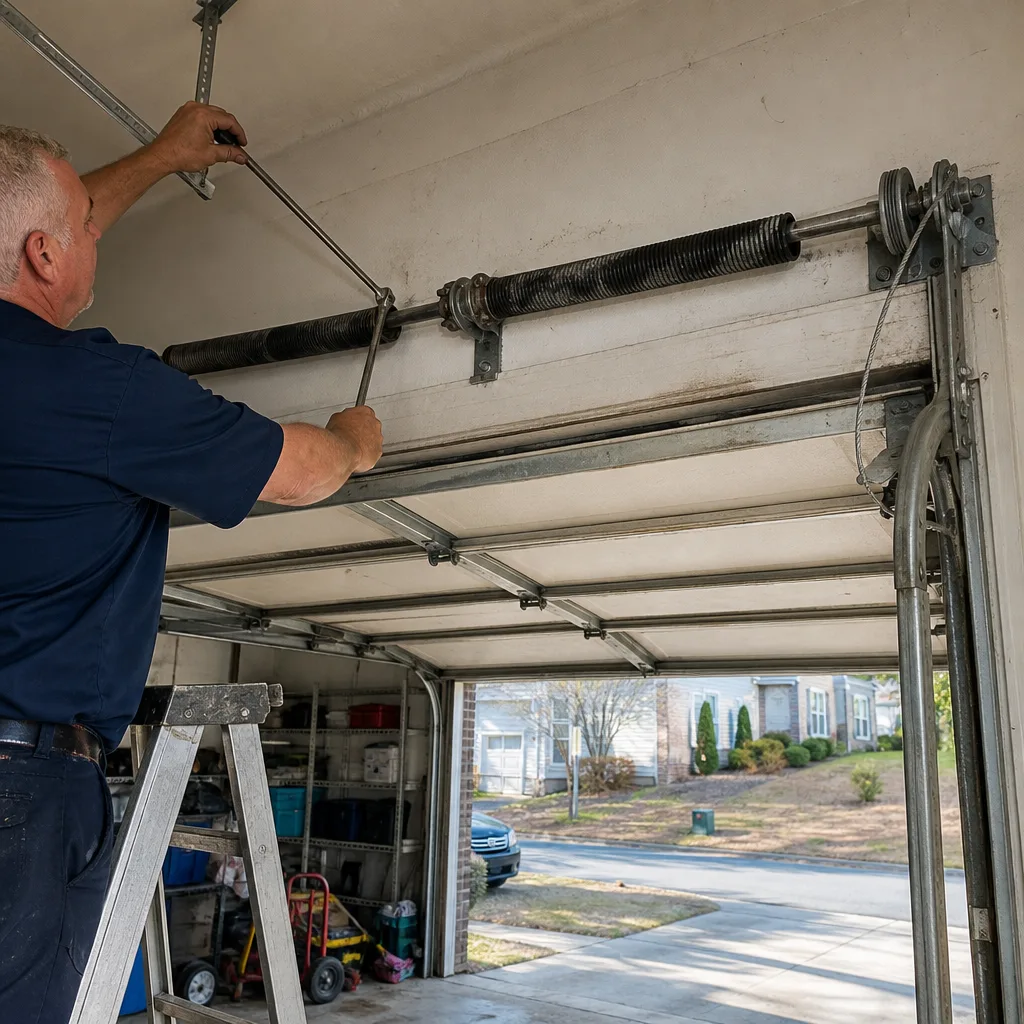
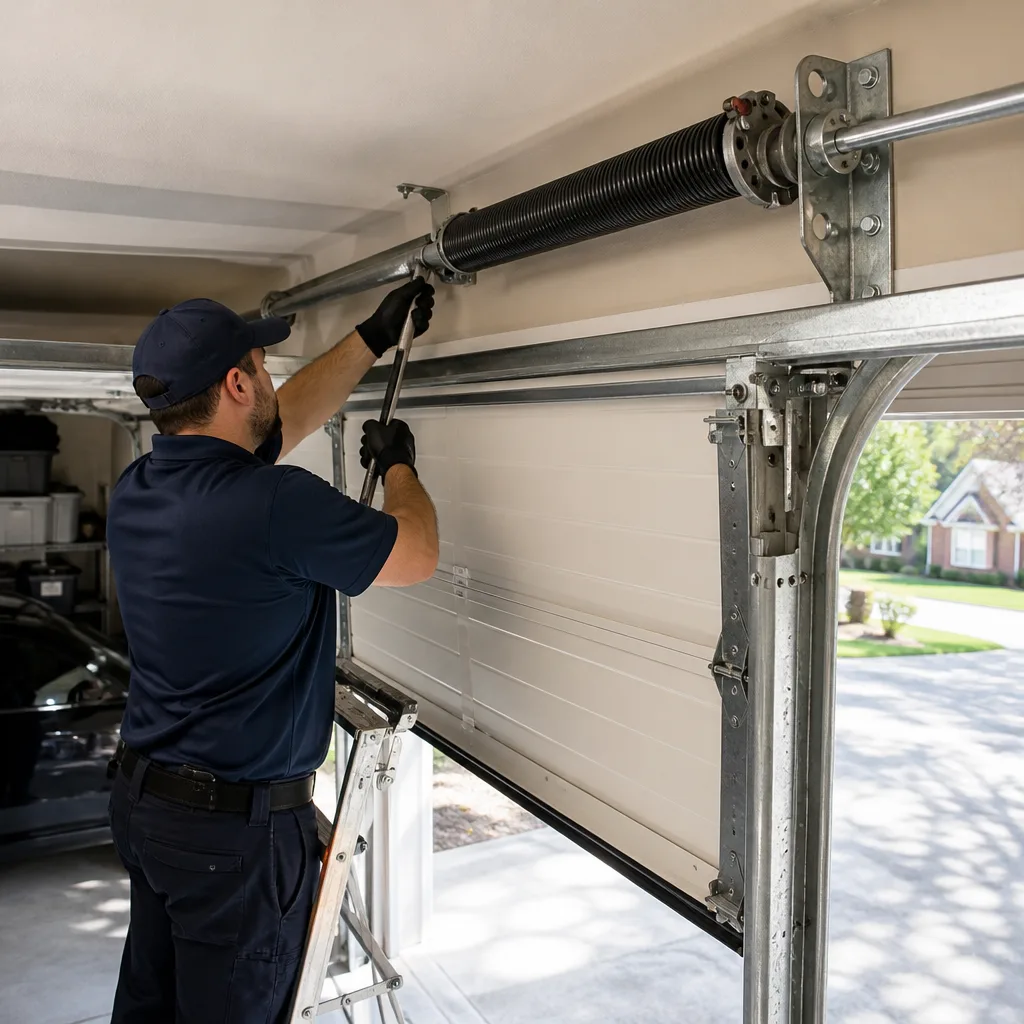
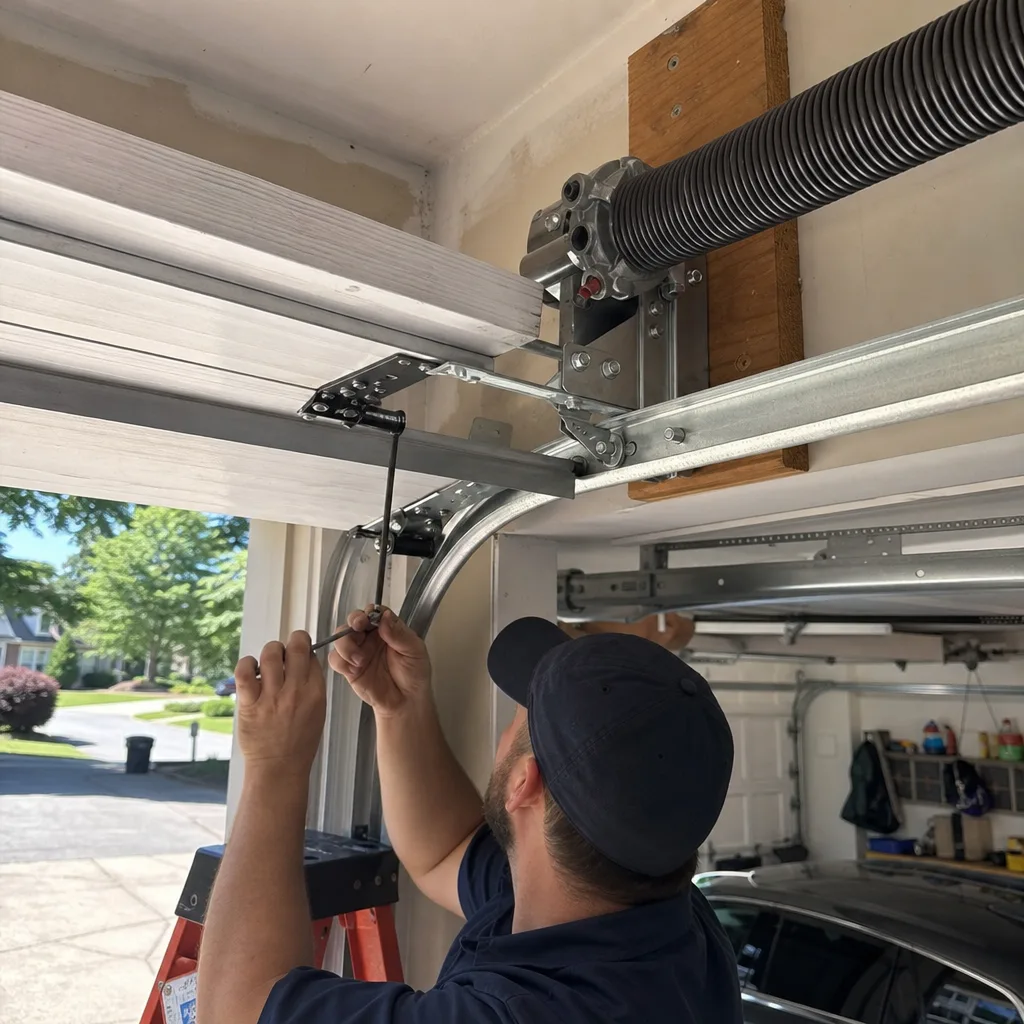
- Torsion spring replacement: The torsion spring, which is the large coil mounted horizontally above the door opening, is wound under hundreds of pounds of torque. The winding process requires specialty winding bars inserted into the spring cone and careful quarter-turn adjustments. If a winding bar slips, the spring unwinds instantly, and the bar becomes a projectile. This is the single most dangerous residential repair in the home-service trades, and it’s not close.
- Cable replacement: The lift cables run from the bottom brackets up to the spring assembly, and they’re under the full weight of the door whenever the door is closed. Removing a cable requires de-tensioning the springs first, which means you’re back to the torsion spring hazard. There’s no safe workaround.
- Track realignment under load: The tracks guide the rollers, and if they’re bent or misaligned, the door can bind and jump the track. Straightening or replacing tracks requires supporting the door’s full weight and unbolting sections that are under lateral load. If a track comes loose while the door is up, the door comes down.
If your door is making a loud noise, moving unevenly, or showing visible cable wear, the honest recommendation from Doyle Garage Doors Marietta is to stop using the door and call a professional. A door that’s behaving strangely is a door that’s about to tell you exactly what’s wrong, and you don’t want to be standing under it when it does.
The Real Cost Comparison: DIY Parts vs. Professional Installation
Homeowners often price out a part online, see a $45 torsion spring, and conclude that a professional charging $300 is somehow inflating the price. What that comparison misses is what professionals call the “mistake cost”: the amount you’ll spend to have someone undo a DIY attempt that went sideways. We’ve seen it enough in Marietta to tell you it’s a real line item.
The Five Most Common Repairs: DIY Parts vs. Professional Installed Cost
| Repair | DIY Parts Cost (Marietta market) | Professional Installed Cost | Mistake Cost (typical range to fix a DIY attempt) |
|---|---|---|---|
| Torsion spring replacement (single) | $45 – $90 | $180 – $340 | $380 – $650 (damaged cone, bent shaft, door off track) |
| Cable replacement (pair) | $25 – $50 | $150 – $275 | $250 – $450 (snapped cable under load, bent bottom bracket) |
| Roller replacement (set of 10 – 12) | $30 – $70 | $120 – $220 | $180 – $300 (jumped track, damaged hinge) |
| Bottom seal replacement | $15 – $35 | $85 – $160 | $60 – $120 (mis-cut seal, door won’t close flush) |
| Opener trolley carriage replacement | $40 – $80 | $160 – $300 | $200 – $350 (stripped rail, damaged chain/belt) |
These are Marietta market prices based on what we see across Cobb County, and they reflect the reality that parts are cheap but knowledge is expensive. The professional price includes the part, the labor, the liability, and the guarantee. The DIY price includes none of those last three.
One thing worth stating plainly: garage door opener repair on brands like LiftMaster and Chamberlain follows the same logic. The opener itself isn’t dangerous, but the door attached to it is, and a misdiagnosed opener problem often masks a spring or cable issue that a homeowner won’t recognize until the door falls.
How to Identify Your Spring System from the Garage Floor (Without Touching Anything)
Before you can make an informed DIY-versus-professional decision, you need to know which spring system your Marietta home has. The safety rules differ completely between the two, and identifying which one you have takes about thirty seconds from the garage floor. You don’t need to touch anything.
Step 1: Look Above the Closed Door
Stand inside your garage, facing the closed door, and look up at the area directly above the door opening.
Step 2: What Do You See?
- If you see a thick coil of steel mounted horizontally on a metal shaft above the center of the door opening: You have a torsion spring system. The spring is typically 1.5 to 2 inches in diameter and 18 to 30 inches long, mounted parallel to the door. This is the standard on homes built in Marietta after roughly 1985.
- If you see two long, thinner coils running perpendicular to the door along the horizontal tracks: You have an extension spring system. These coils stretch and contract as the door moves, and they’re typically found on older Marietta homes, especially ranches and mid-century builds in neighborhoods like East Cobb and the areas off Powder Springs Road.
Step 3: Why It Matters
Torsion springs are wound with hundreds of pounds of torque, and they require specialty winding bars and a specific winding sequence to service. Extension springs stretch under load, and if one breaks without a safety cable running through it, the spring becomes a flying chunk of steel. Both systems are dangerous, but the failure modes are different, and the repair procedures are completely different. If you misidentify which system you have and follow the wrong procedure, you’re not doing a repair wrong; you’re doing a different repair entirely.
Homes in developments along Whitlock Avenue and many of the newer subdivisions near Kennesaw Mountain overwhelmingly use torsion systems. Older stock in the historic districts around Marietta Square frequently still has extension systems, sometimes original to the home. If you’re uncertain what you’re looking at, Doyle Garage Doors Marietta can tell you over the phone from a description or a photo, no service call required.
The Liability Question: What Your Insurance Company Will Ask
Most Marietta homeowners don’t think about their homeowner’s insurance policy until something goes wrong, and a garage door injury is a situation where “something went wrong” is a deeply understated phrase. Local Garage Door Permits, Codes & Inspections in GA: What You Need to Know can also affect liability in some cases. The insurance reality is uncomfortable but worth knowing before you start a project.
Manufacturer documentation for torsion springs, lift cables, and track assemblies is remarkably consistent: these components are marked as professional-service-only, with explicit warnings against homeowner repair. When you open a Clopay or Amarr door manual, the language is there in plain English. If you attempt a repair on a component the manufacturer has designated as professional-only and you’re injured, your insurance company has a clear path to dispute the claim on the grounds that you knowingly undertook a repair the manufacturer said not to do.
The distinction matters less for things like sensor cleaning and lubrication. No insurance adjuster is going to deny a claim because you sprayed WD-40 on your rollers. But a torsion spring injury is a different category: shredded hands, deep lacerations, broken bones, and worse are the documented injury patterns, and those medical bills run into five figures fast. If the insurance company can point to the manufacturer’s warning label and your decision to proceed anyway, you’re in a genuinely difficult position.
Professional repair shifts that liability to the repair company. A licensed, insured professional who performs a spring replacement is carrying the liability for the work. Which is part of what you’re paying for when the invoice says $300 instead of $45.
The Gray Zone: Three Tasks Where the Answer Depends
Not every garage door task is clearly safe or clearly unsafe. Three common jobs sit in a genuine gray zone where the right answer depends on your specific door configuration, your tools, and your tolerance for frustration. Here’s a decision framework for each.
1. Opener Trolley Carriage Replacement
The trolley carriage is the plastic or metal piece that travels along the opener rail and connects to the door arm. On Genie and Craftsman openers, it’s a wear item that eventually strips out. The replacement itself is not dangerous: you’re working on the opener, not the door’s lifting mechanism, and the door disengages from the opener when you release the emergency cord.
The decision framework: If you can disconnect the door from the opener using the red release cord and operate the door manually without difficulty, the carriage replacement is a straightforward mechanical job that most homeowners can handle. If the door is heavy or unbalanced when you operate it manually, stop: you’ve discovered a spring problem, and the carriage replacement should happen alongside professional spring work, not instead of it.
2. Bottom Seal Swap
The rubber or vinyl seal along the bottom of the door wears out every three to five years in Marietta’s humidity, and replacing it means sliding the old seal out of the aluminum retainer and sliding a new one in. It’s genuinely DIY-friendly on most doors.
The decision framework: If your retainer is in good shape and the old seal slides out without resistance, this is a 20-minute job. If the retainer is corroded, bent, or mounted so close to the ground that you can’t access it without lifting the door, you’re now lifting a door under spring tension, which is the point where this stops being a seal job and starts being a door job. Time to call.
3. Roller Replacement
Rollers wear out, and the nylon ones on LiftMaster-equipped doors typically last seven to ten years in Marietta’s climate. Replacing rollers on the vertical sections of track is manageable. The bottom rollers, however, are attached to the bottom brackets that also anchor the lift cables, and those brackets are under spring tension.
The decision framework: If you’re only replacing upper rollers that pop out of their hinges without resistance, you’re fine. If you’re replacing bottom rollers or any roller that requires unbolting a bracket with a cable attached, you’re now touching the tension system, and that’s a professional job. The rule of thumb: if a cable is attached to the bracket you’re unbolting, stop.
What Marietta’s Climate and Housing Stock Mean for Your Door
Marietta’s specific conditions shape how often garage doors fail and what they need when they do. Humidity is the quiet culprit: the subtropical moisture of a Georgia summer means metal components rust faster here than they do in drier climates, and rubber seals dry out and crack in the winter-temperature swings. We see more spring corrosion in Marietta than our colleagues report from other parts of the country, and it affects the DIY calculus because rusted hardware is less forgiving when you’re trying to loosen it.
The housing stock matters too. Homes built in Marietta between 1960 and 1990 were often constructed with single-car or narrow two-car garage doors that have been retrofitted with newer openers, and the retrofit process sometimes left doors with mismatched components. A 1970s extension-spring system paired with a modern Chamberlain opener is a common configuration in the neighborhoods off Roswell Road and along the eastern side of town. Those mismatches create specific failure points that aren’t covered in generic YouTube tutorials.
Newer construction in West Cobb and around the Marietta Country Club area tends toward torsion systems and larger doors, which means heavier panels and tighter tolerances. A door that weighs 300 pounds doesn’t act the same as one that weighs 180, and the margin for error shrinks accordingly. None of this changes the fundamental safe-versus-unsafe line, but it adjusts the difficulty level within each category.
For a full picture of what a professional repair involves in this market, Garage Door Repair in Marietta goes deeper into the specific failure patterns we see across Cobb County.
Common Mistakes to Avoid
- Misidentifying the spring system: Treating a torsion spring like an extension spring, or vice versa, is the fastest way to turn a $45 part into a $650 repair. The procedures are not interchangeable, and following the wrong one on a loaded system is dangerous.
- Using the wrong tools: Attempting to wind a torsion spring with screwdrivers, pry bars, or anything other than purpose-built winding bars is the most common injury scenario we hear about. The bars are $15. A hand surgeon is considerably more.
- Releasing the emergency cord with the door up: If the door is open and the spring has failed, pulling the red release cord drops the full weight of the door instantly and uncontrolled. This is how fingers get crushed and how doors come off their tracks in Marietta garages every year.
- Ignoring a door that’s moving unevenly: A door that shudders, stops halfway, or moves faster on one side is telling you something about its balance. Continuing to operate it turns a $200 spring repair into a full track replacement.
- Lubricating the tracks themselves instead of the rollers: Greasing the track channel attracts dirt and debris that wear out rollers faster. The lubricant belongs on the roller bearings, hinges, and spring coils, not on the track surface.
- Assuming an opener problem is just an opener problem: When a LiftMaster or Genie opener struggles, burns out, or refuses to move the door, the cause is frequently a spring that has lost tension. Replacing the opener without addressing the spring means you’ll replace the opener again within a year.
When to Call a Professional
Call a professional when the component is under tension and you don’t do this for a living. That means torsion springs, extension springs, lift cables, bottom brackets, and any track work that requires supporting the door’s weight. Call when you’re uncertain what you’re looking at, when the door is behaving unpredictably, or when you’ve already tried a DIY fix and made things worse. There’s no shame in the last one; we fix DIY attempts regularly, and the only frustrating part is when the attempt should have been two phone calls instead of one.
The other thing worth knowing: a professional visit doesn’t commit you to anything. Garage Door Installation in Marietta and repair both start with an assessment, and Doyle Garage Doors Marietta offers free estimates in Marietta. You get a written price before any work begins, and you can decline it. The consultation costs you nothing, and you’ll know exactly what you’re dealing with.
Reach us at (762) 209-3693, day or night. A real person answers.
Frequently Asked Questions
A torsion spring on a standard two-car garage door stores roughly the same energy as a drawn crossbow, and when it releases unexpectedly, the results are severe: deep lacerations, broken bones, and worse are the documented injury patterns. The danger isn’t reduced by being careful, patient, or mechanically inclined. The danger is inherent to the stored energy, which is why our answer to this question is never “be careful”; it’s “don’t.” Call (762) 209-3693 for a free estimate instead.
Lubrication, sensor cleaning and alignment, limit switch adjustment, manual release testing, and visual inspections are all safe because they don’t involve releasing or working on components under tension. Everything that touches the springs, cables, or loaded track assemblies is a professional job. If you’re not sure which category your task falls into, call (762) 209-3693 and ask; we’ll tell you over the phone.
Torsion spring replacement in Marietta typically runs $180 to $340, cable replacement $150 to $275, and roller replacement $120 to $220 for a full set. Opener trolley carriage replacement runs $160 to $300, and bottom seal replacement is usually $85 to $160. These are installed, guaranteed prices. Every job includes a written price before work starts, so the number you’re quoted is the number you pay. Call (762) 209-3693 to get a specific quote for your door.
Yes, and a real person will answer the phone when you call. We serve Marietta and Cobb County with same-day availability for spring failures, cable breaks, and stuck doors, and we answer calls 24/7 including weekends and holidays. Call (762) 209-3693 and tell us what the door is doing; we’ll tell you exactly what to expect and when we can be there.
No. We write down the price and hand it to you before any work begins, and that written price is the price you pay. If we find something else while we’re working, we stop and get your approval before proceeding. There’s no verbal estimate, no invoice surprise, and no upsell pressure. If you’d like to talk through what a repair might cost before we even come out, call (762) 209-3693.
Yes. Our trucks are stocked with torsion and extension springs in the sizes most common to Marietta homes, along with cables, rollers, brackets, and opener components for LiftMaster, Chamberlain, Genie, and Clopay systems. In most cases, a spring replacement is done on the first visit, not scheduled for a second one. Call (762) 209-3693 and we’ll confirm the parts are on the truck before we head your way.
The Bottom Line
The DIY-versus-professional question for garage doors isn’t a referendum on your competence. It’s a question about physics. The components that store the energy which lifts your door are the components that can hurt you, and no amount of careful attention changes the numbers. What Marietta homeowners can safely do is maintain the door: lubricate it, align its sensors, watch its behavior, call for help when it changes. What they should not do is touch anything under tension. The safe tasks cost almost nothing and extend the life of the door. The unsafe tasks cost between $150 and $340 when a professional handles them, and considerably more in medical bills and regret when a homeowner tries and the physics decides otherwise. Call (762) 209-3693 for a free estimate, get a written price, and make the decision with a professional’s eyes on the door. That costs nothing, and it’s the only path. For more guides & resources on keeping your door safe and functional, explore our blog. that keeps you and your household out of the injury statistics.
Written by Aaron Teague, Owner at Doyle Garage Doors Marietta, serving Marietta since 2001.
See the difference
 Before
 After
After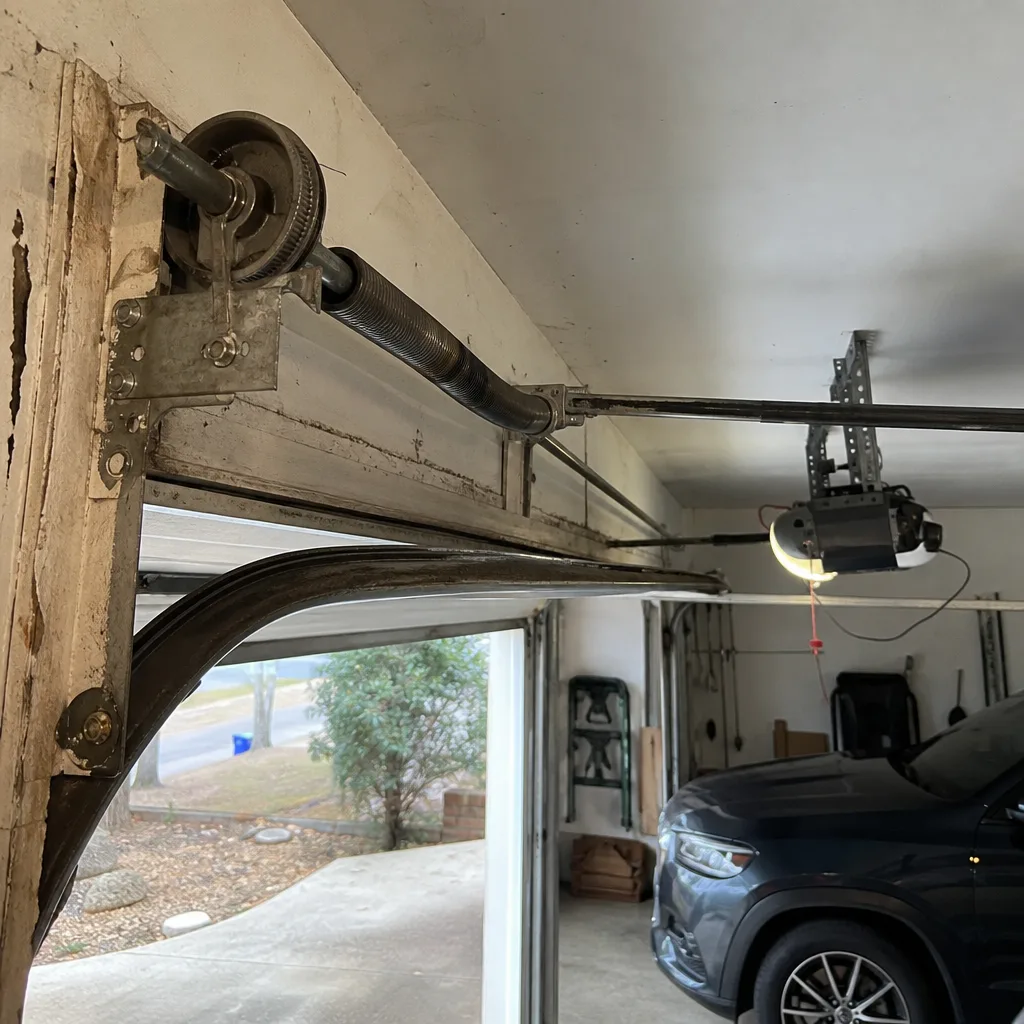 Before
 After
After Before
 After
After